
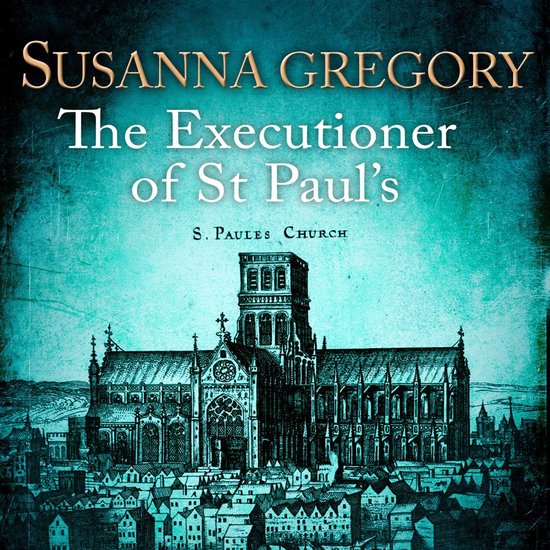
Adventures of Thomas Chaloner12-The Executioner of St Paul's
Susanna Gregory
- 12 januari 2017
- 9781405530804
Samenvatting:
London, September 1665
London was a city of ghosts. Gone was its habitual hubbub of bustle and noise, and in its place was an oppressive silence, broken only by the bells that tolled for the dead. The wharves that should have been thick with ships were empty, and even the mighty Thames seemed subdued, its flow reduced to a fraction of its normal size by weeks of drought.
Thomas Chaloner, spy to the Earl of Clarendon, reined in at the Southwark end of London Bridge. He was used to seeing it crammed with carts, coaches, horses and pedestrians, all vying for space, and yelling their displeasure when there was not enough of it. That morning, the only living things were two pigeons, preening in the middle of what had been one of the country's most hectic thoroughfares.
It was still early - not yet seven o'clock - but the day was already scorching, the sun beating down remorselessly from a cloudless sky. The air was still, dusty and foul, full of the stink of death and uncollected rubbish.
A fortified barrier stood at the entrance to the bridge, presenting a wall of solid oak to would-be travellers. Above it were spikes bearing the heads of traitors, so that a forest of skulls grinned down as Chaloner pressed his heels into his horse's sides and began to ride forward. He had the uncomfortable sense that they were laughing at him for the folly on which he was about to embark.
'What do you want?' came a suspicious voice from one of the gun loops.
'I have business in the city,' Chaloner called back.
He watched as the left-hand door was pulled ajar to reveal two guards. One wore a scarf over his face to ward off infection, while the other had donned a plague mask with a long 'beak'. They were not alone - he sensed unseen eyes watching from various vantage points, and had no doubt that their owners had muskets primed and ready.
'You cannot pass,' the scarfed man declared. 'The only thing that lies over this bridge is death and misery.'
'And the poor,' added the second, his voice muffled through the mask. 'The rich fled weeks ago, and the only folk left now are those with nowhere else to go.'
'Go home. Only drunks, madmen or fools cross the river these days.'
'Or those with orders to follow,' said Chaloner.
The plague raging through London in 1665 has emptied the city. The only people left are those too poor to flee, or those who selflessly struggle to control the contagion and safeguard the capital's future.
Amongst them, though, are those prepared to risk their health for money - those who sell dubious 'cures' and hawk food at wildly inflated prices. Also amongst them are those who hold in their hands the future of the city's most iconic building - St Paul's Cathedral.
The handsome edifice is crumbling from decades of neglect and indecision, giving the current custodians a stark choice - repair or demolish. Both sides have fanatical adherents who have been fighting each other since the Civil Wars. Large sums of money have disappeared, major players have mysteriously vanished, and then a unidentified skeleton is discovered in another man's grave.
A reluctant Chaloner returns to London to investigate, only to discover that someone is determined to thwart him by any means - by bullet, poison or bludgeon - and he fears he has very little time to identify the culprits before he becomes yet another victim in the battle for the Cathedral's future.