
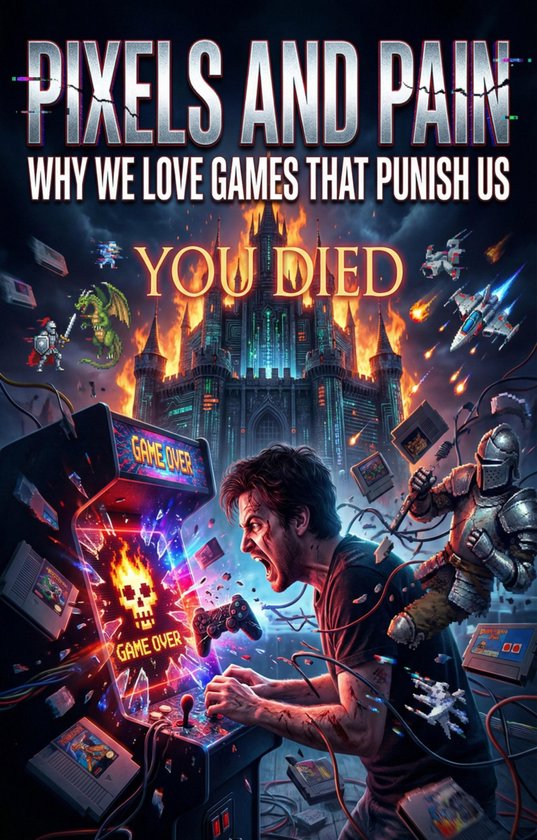
Pixels and Pain
Max Glitch
- 08 februari 2026
- 9783565229697
Samenvatting:
Why do we voluntarily spend hours failing, dying, and restarting? "Pixels and Pain" explores the strange masochism of the hardcore gamer. From the unforgiving coin-munchers of the 80s arcade era to the modern "Soulslike" genre, this book investigates the psychology behind difficulty and reward. It asks a simple question: Is fun really about having a good time, or is it about overcoming suffering? We trace the evolution of challenge in video games. In the early days, difficulty was a necessity to extend the life of short games. Today, it is a design philosophy, a badge of honor for players who reject the "hand-holding" of mainstream titles. Through interviews with game designers and competitive players, we uncover the delicate balance between frustration and satisfaction—the "flow state" that only exists on the edge of failure. The book also delves into the culture of speedrunning and eSports, where mastery requires a level of dedication that rivals olympic athletes. We look at how games simulate the hero's journey, forcing us to grow, learn patterns, and adapt, offering a sense of progression often missing in real life. Whether you are a veteran of the NES era or a modern competitive gamer, this book offers a new perspective on your hobby. It validates the broken controllers and the rage-quits, showing them as essential parts of a medium that tests our limits. It's a love letter to the "Game Over" screen, and the resilience it teaches us.