
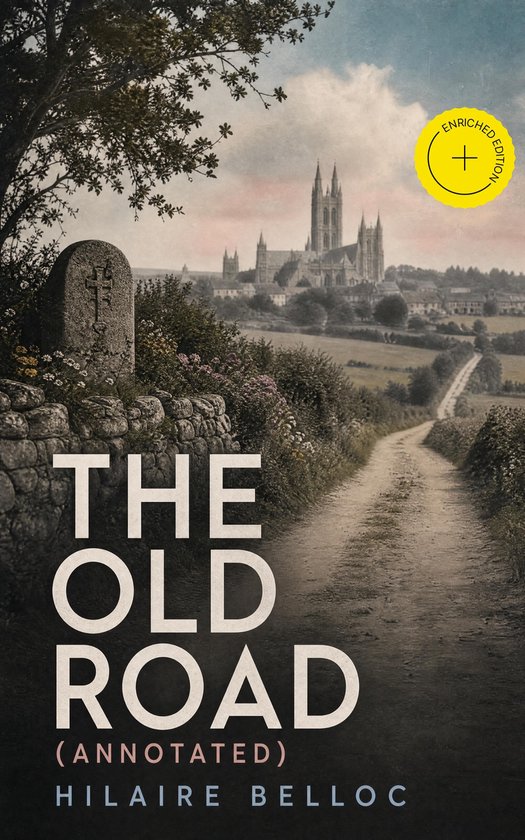
The Old Road (Annotated)
Hilaire Belloc
- 25 november 2023
- 4066339555792
Samenvatting:
In The Old Road, Hilaire Belloc traces the ancient route from Winchester to Canterbury, presenting it not merely as a line across southern England but as a surviving artery of national memory, pilgrimage, and settlement. Blending topographical observation, historical reconstruction, and meditative prose, Belloc writes in the tradition of antiquarian travel literature while giving the journey a distinctly Catholic and civilizational resonance. His style is vigorous, personal, and argumentative, combining close attention to landscape with a larger vision of continuity between place, faith, and history. Belloc, an Anglo-French writer, historian, poet, and controversialist, was deeply shaped by Roman Catholicism and by his suspicion of modernity's severance from inherited forms of life. His interest in roads, frontiers, and medieval institutions reflects a broader intellectual project: to recover the organic unity of Europe's past against the abstractions of industrial and liberal modern civilization. The Old Road emerged from both walking experience and historical conviction. This book is recommended for readers interested in English history, sacred geography, pilgrimage, and literary travel writing. It rewards those who enjoy scholarship animated by personality, and landscapes interpreted as archives of culture. This enriched edition has been carefully crafted to add value to your reading experience. - A succinct Introduction situates the work's timeless appeal and themes. - The Synopsis outlines the central plot, highlighting key developments without spoiling critical twists. - A detailed Historical Context immerses you in the era's events and influences that shaped the writing. - A thorough Analysis dissects symbols, motifs, and character arcs to unearth underlying meanings. - Reflection questions prompt you to engage personally with the work's messages, connecting them to modern life. - Hand‐picked Memorable Quotes shine a spotlight on moments of literary brilliance. - Interactive footnotes clarify unusual references, historical allusions, and archaic phrases for an effortless, more informed read.