
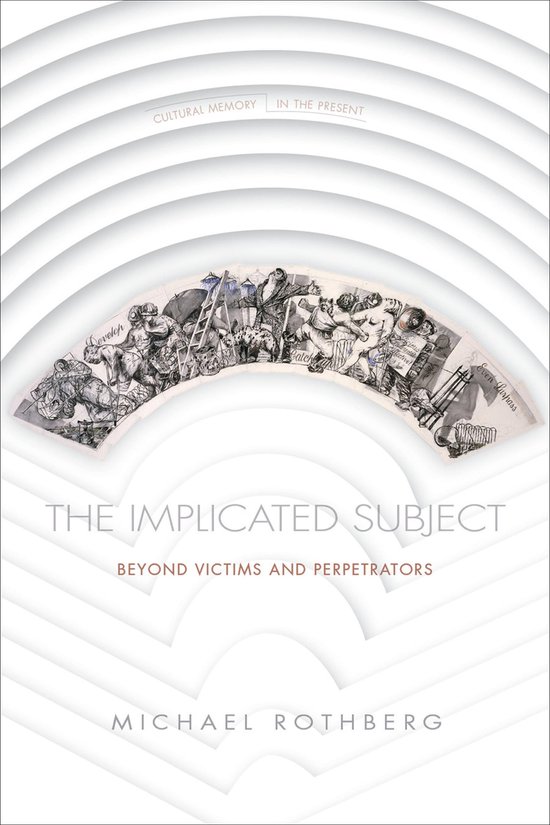
Cultural Memory in the Present - The Implicated Subject
Michael Rothberg
- 06 augustus 2019
- 9781503609600
Samenvatting:
"A pathbreaking meditation . . . shifts the discussion . . . from . . . notions of guilt and innocence to the complexities of responsibility and accountability." —Amir Eshel, Stanford University
When it comes to historical violence and contemporary inequality, none of us are completely innocent. We may not be direct agents of harm, but we may still contribute to, inhabit, or benefit from regimes of domination that we neither set up nor control. Arguing that the familiar categories of victim, perpetrator, and bystander do not adequately account for our connection to injustices past and present, Michael Rothberg offers a new theory of political responsibility through the figure of the implicated subject. The Implicated Subject builds on the comparative, transnational framework of Rothberg's influential work on memory to engage in reflection and analysis of cultural texts, archives, and activist movements from such contested zones as transitional South Africa, contemporary Israel/Palestine, post-Holocaust Europe, and a transatlantic realm marked by the afterlives of slavery. An array of globally prominent artists, writers, and thinkers—from William Kentridge, Hito Steyerl, and Jamaica Kincaid, to Hannah Arendt, Primo Levi, Judith Butler, and the Combahee River Collective—speak show how confronting our own implication in difficult histories can lead to new forms of internationalism and long-distance solidarity.
"A significant work by a major scholar . . . .While drawing on a global range of histories and texts, the book never loses focus on the contemporary moment." —Robert Eaglestone, Royal Holloway, University of London
"Offer[s] a fresh vocabulary to confront our personal and collective responsibility in the face of massive political violence, past and present." —Marianne Hirsch, Columbia University