
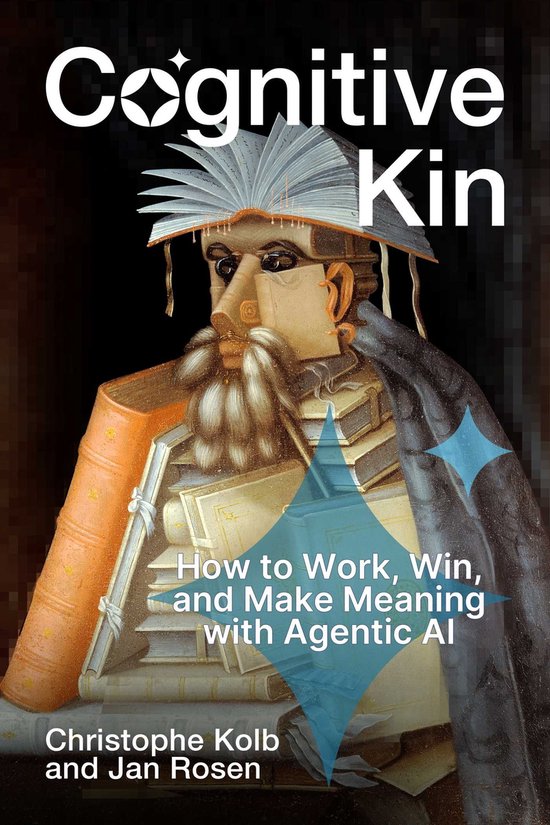
Cognitive Kin
Christophe Kolb
- 10 maart 2026
- 9781646872800
Samenvatting:
Now that AI has a will, it’s up to us to find a way. For decades, we built software that did what it was told—and nothing else. Agentic AI breaks this bargain: systems that remember, reason, and pursue goals. They arrive less like code and more like colleagues—tireless, fast, and, like any new hire, occasionally in need of supervision.
In Cognitive Kin, Christophe Kolb and Jan Rosen map the threshold where artificial intelligence stops being a feature and becomes a workforce. Drawing on firsthand experience at the frontier of agentic AI, they show how digital labor becomes viable, why org charts give way to networks of intent, and how leadership shifts to orchestration. They translate the machinery—memory, feedback loops, tool use—into plain language, then follow the shockwave into strategy, culture, and governance.
This isn’t tomorrow’s speculation. It’s a present-tense transition that is reshaping the meaning of work and creating new sources of value. The advantage will belong to firms that learn to think with thinking things—working alongside intelligent systems without outsourcing judgment, meaning, or responsibility.