
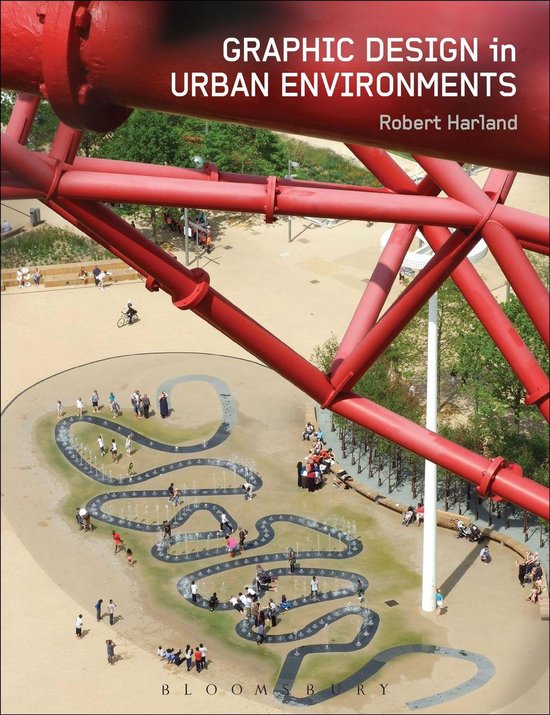
Graphic Design in Urban Environments
Robert Harland
- 20 oktober 2016
- 9781472597762
Samenvatting:
Graphic Design in Urban Environmentsintroduces the idea of a category of designed graphic objects that significantly contribute to the functioning of urban systems. These elements, smaller than buildings, are generally understood by urban designers to comprise such phenomena as sculpture, clock towers, banners, signs, large screens, the portrayal of images on buildings through “smart screens,” and other examples of what urban designers call “urban objects.”The graphic object as it is defined here also refers to a range of familiar things invariably named in the literature as maps**,** street numbers**,** route signs**,** bus placards, signs, architectural communication, commercial vernacular, outdoor publicity, lettering, banners, screens, traffic and direction signs and street furniture. One can also add markings of a sports pitch, lighting, bollards, even red carpets or well dressings.
By looking at the environment, and design and deconstructing form and context relationships, the defining properties and configurational patterns that make up graphic objects are shown in this book to link the smallest graphic detail (e.g. the number 16) to larger symbolic statements (e.g. the Empire State Building). From a professional design practice perspective, a cross section through type, typographic, graphic and urban design will provide a framework for considering the design transition between alphabets, writing systems, images (in the broadest sense) and environments.