
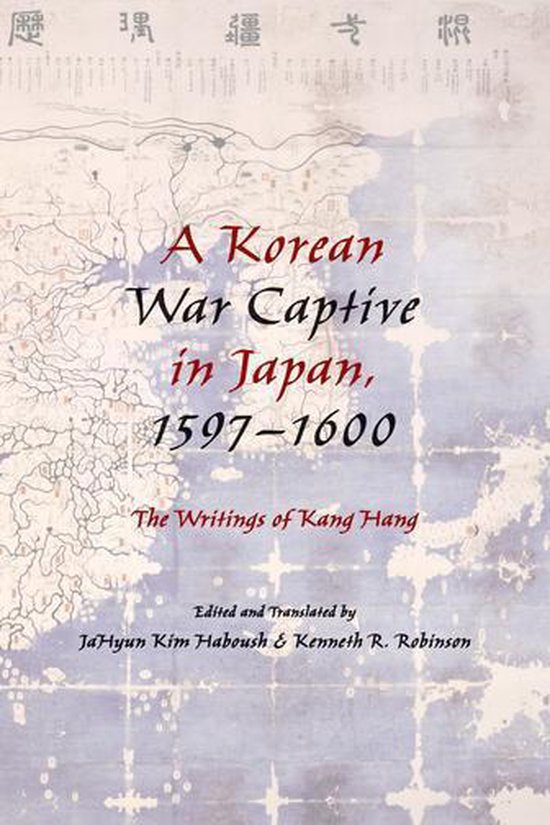
A Korean War Captive in Japan, 1597–1600
Hang Kang
- 12 november 2013
- 9780231535113
Samenvatting:
Kang Hang was a Korean scholar-official taken prisoner in 1597 by an invading Japanese army during the Imjin War of 1592–1598. While in captivity in Japan, Kang recorded his thoughts on human civilization, war, and the enemy"s culture and society, acting in effect as a spy for his king. Arranged and printed in the seventeenth century as Kanyangnok, or Records of a Shepherd, Kang"s writings were valuable to his government. Offering new information about a society few Koreans had seen for one hundred and fifty years, these writings provided new information on Japanese politics, culture, and military organization.
In this complete, annotated translation of Kanyangnok, readers encounter Kang"s rich commentary on human behavior and the nature of loyalty during a time of war. A neo-Confucianist with a deep knowledge of Chinese philosophy and history, Kang drew a distinct line between the Confucian values of his world, which distinguished self, family, king, and country, and a foreign culture that practiced invasion and capture, and, in his view, was largely incapable of civilization. Relating the experiences of a former official playing an exceptional role in wartime, and the rare voice of a Korean speaking plainly and insightfully on war and captivity, this volume enables a deeper appreciation of the phenomenon of war at home and abroad.