
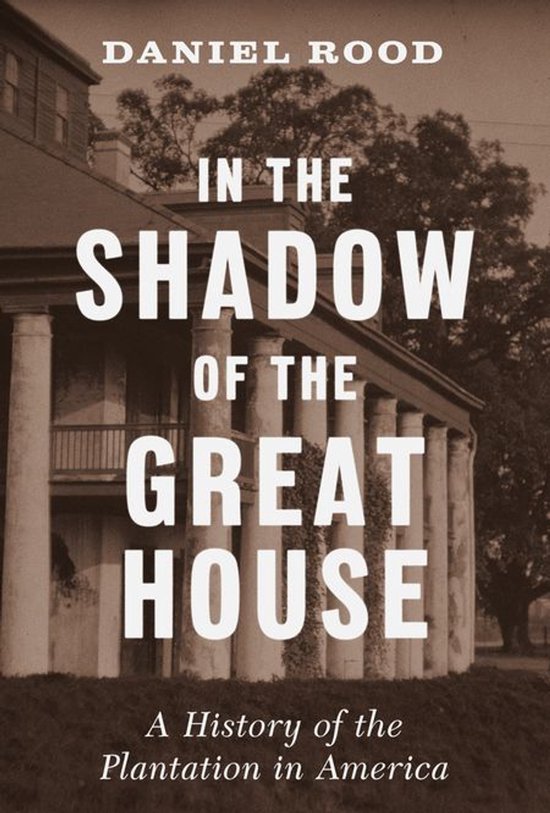
In the Shadow of the Great House
Daniel Rood
- 17 maart 2026
- 9781631498381
Samenvatting:
From an acclaimed historian, a new history of American slavery and American capitalism, told through the setting where both developed.
Over the last few decades, and especially in the last ten years, our understanding of slavery has been transformed by the work of many talented scholars. We have learned a great deal about the actions of enslavers, the struggles and victories of the enslaved, and how the afterlives of American slavery persist into the present. Yet Dan Rood’s In the Shadow of the Great House is one of the first contemporary books to focus on the primary engine of slavery, race, and capitalism in this country: the plantation.
The plantation was invented on the small Atlantic island of São Tomé in the 1500s, and the island also became the site, soon enough, of the first slave revolt. The brutal technology was then perfected in Barbados, where planters worked tens of thousands of African captives to their deaths in sugar factories. But it was in the United States, Rood shows, that the plantation found its most powerful manifestations. In Virginia, Carolina, and then the Deep South, successive plantation revolutions transformed slavery into a much more rigid and oppressive institution. While prejudice certainly preceded the plantation, incomparably wealthy planters now insisted on a rightless, eternally available, “increasing” source of labor, and in the process reinvented human bondage and stamped it onto a single race.
In a narrative that sweeps across four hundred years of American history, Rood reveals that the plantation did not die after the Civil War. It metastasized. From the advent of sharecropping in the late nineteenth century to the rise of cotton in mid-twentieth century California to today’s chicken processing plants—which sit on the same land once occupied by plantations and are staffed largely by migrant workers—the plantation has cast a long shadow over American life.
Even as he describes how the always-evolving plantation spread across much of the landscape, devouring people and nature in equal measure, Rood documents the “dark retreats” carved out of plantation life by the enslaved. It was the enslaved—those caught up in the plantation’s treadmill, those who were thrown violently into the gears of its machinery—who offered the most clear-eyed understanding of how it worked, and what these behemoths told us, and still tell us, about our country.