
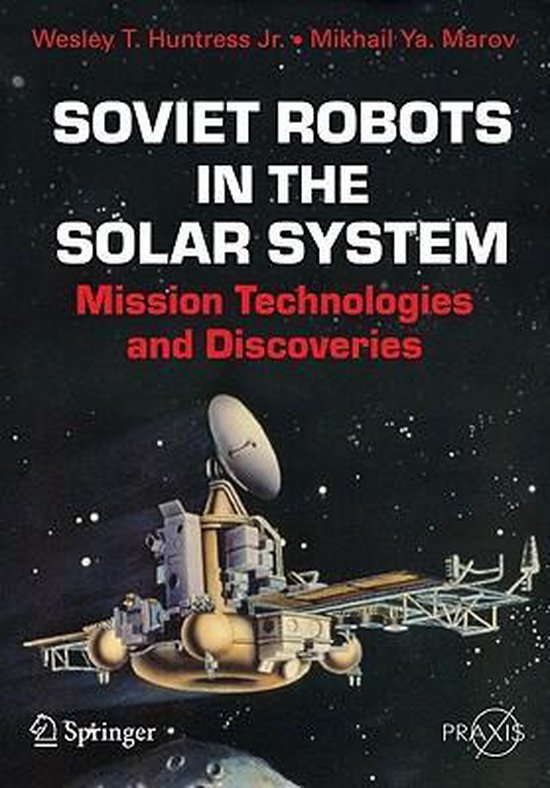
Soviet Robots In The Solar System
Wesley T. Huntress, JR.
- 01 juli 2011
- 9781441978974
Samenvatting:
Soviet Robots in the Solar System provides a history of the Soviet robotic lunar and planetary exploration program from its inception, with the attempted launch of a lunar impactor on September 23, 1958, to the last launch in the Russian national scientific space program in the 20th Century, Mars 96, on November 16, 1996.
The Soviet robotic space exploration program began in a spirit of bold adventure and technical genius. It ended after the fall of the Soviet Union and the failure of its last mission to Mars in 1996. Soviet Robots in the Solar System chronicles the scientific and engineering accomplishments of this enterprise from its infancy to its demise. Each flight campaign is set into context of national politics and international competition with the United States.
Together with its many detailed illustrations and images, Soviet Robots in the Solar System
- presents the most detailed technical description of Soviet robotic space flights
- provides a unique insight into programmatic, engineering, and scientific issues
- covers mission objectives, spacecraft engineering, flight details, scientific payload and results
- describes in technical depth Soviet lunar and planetary probes
Soviet Robots in the Solar System provides a history of the Soviet robotic lunar and planetary exploration program from its inception, with the attempted launch of a lunar impactor on September 23, 1958, to the last launch in the Russian national scientific space program in the 20th Century, Mars 96, on November 16, 1996. This title makes a unique contribution to understanding the scientific and engineering accomplishments of the Soviet Union’s robotic space exploration enterprise from its infancy to its demise with the collapse of the Soviet Union. The authors provide a comprehensive account of Soviet robotic exploration of the Solar System for both popular space enthusiasts and professionals in the field. Technical details and science results are provided and put into an historical and political perspective in a single volume for the first time. The book is divided into two parts. Part I describes the key players and the key institutions that build and operate the hardware, the rockets that provide access to space, and the spacecraft that carry out the enterprise. Part II is about putting these pieces together to enable space flight and mission campaigns. Part II is written in chronological order beginning with the first launches to the Moon. Each chapter covers a particular period when specific mission campaigns were undertaken during celestially-determined launch windows. Each chapter begins with a short overview of the flight missions that occurred during the time period and the political and historical context for the flight mission campaigns, including what the Americans were doing at the time. The bulk of each chapter is devoted to the scientific and engineering details of that flight campaign. The spacecraft and payloads are examined with as much technical detail as is available today, the progress is described, and a synopsis of the scientific result is given.