
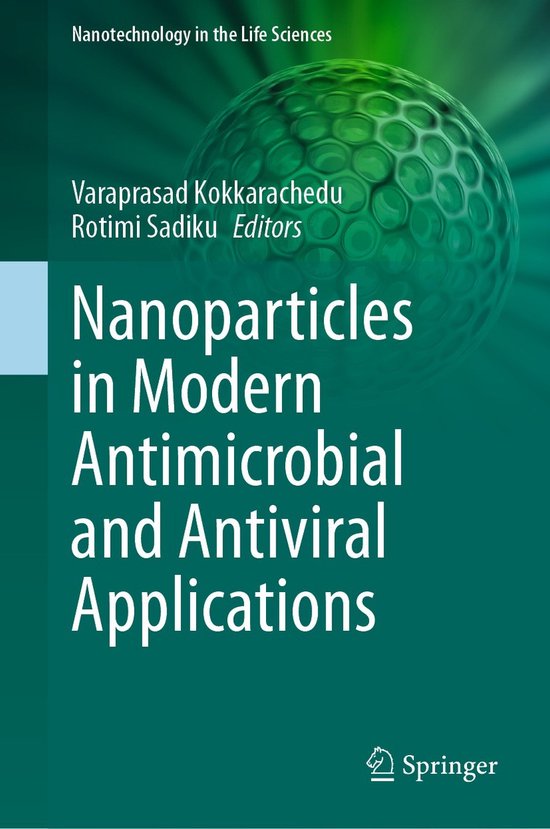
Nanotechnology in the Life Sciences- Nanoparticles in Modern ...
Varaprasad Kokkarachedu, Rotimi Sadiku
- 28 februari 2024
- 9783031500923
Samenvatting:
Nanotechnology-based nanomaterials have revolutionized the field of advanced medical applications by offering new possibilities for treatment and diagnosis.
Nanotechnology-based nanomaterials have revolutionized the field of advanced medical applications by offering new possibilities for treatment and diagnosis. Nano-form materials have become increasingly important in modern healthcare due to their ability to improve bioactivity and therapeutic efficiency. For example, nanomaterials can target specific cells or tissues in the body, which can result in more effective treatments with fewer side effects. However, it is important to carefully control the toxicity of nanomedicine and study its potential toxic effects to ensure patient safety.
Moreover, nanomaterials have shown promise in controlling various types of bacteria, viruses, and even SARS-CoV-2. Their small size and unique properties make them effective tools for combating infectious diseases. This book, "Nanoparticles in Modern Antimicrobial and Antiviral Applications," aims to address key issues related to nanoparticles and their potential applications in healthcare. The book covers topics such as encapsulated polymer systems and their potential applications in COVID-19 treatment, which are not commonly found in other books. As such, it is a valuable resource for those interested in this field and can provide new insights into the use of nanomaterials for medical applications.
Nanotechnology-based nanomaterials have revolutionized the field of advanced medical applications by offering new possibilities for treatment and diagnosis. Nano-form materials have become increasingly important in modern healthcare due to their ability to improve bioactivity and therapeutic efficiency. For example, nanomaterials can target specific cells or tissues in the body, which can result in more effective treatments with fewer side effects. However, it is important to carefully control the toxicity of nanomedicine and study its potential toxic effects to ensure patient safety.
Moreover, nanomaterials have shown promise in controlling various types of bacteria, viruses, and even SARS-CoV-2. Their small size and unique properties make them effective tools for combating infectious diseases. This book, "Nanoparticles in Modern Antimicrobial and Antiviral Applications," aims to address key issues related to nanoparticles and their potential applicationsin healthcare. The book covers topics such as encapsulated polymer systems and their potential applications in COVID-19 treatment, which are not commonly found in other books. As such, it is a valuable resource for those interested in this field and can provide new insights into the use of nanomaterials for medical applications.