
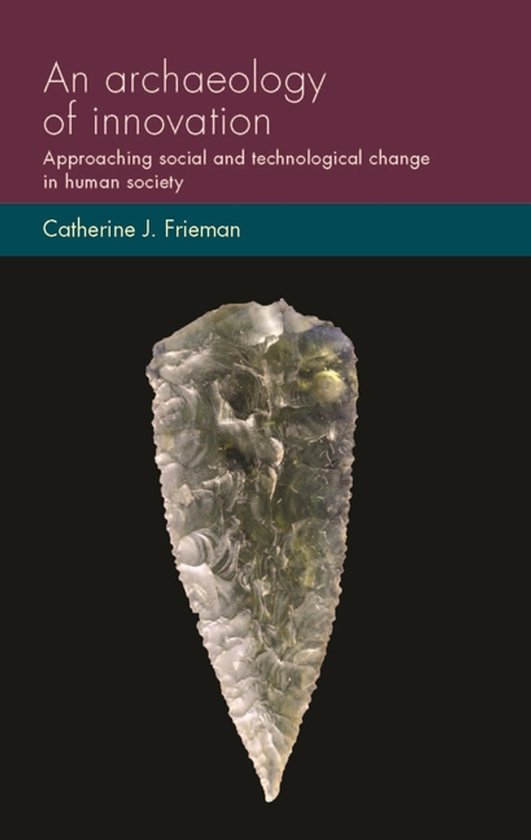
Social Archaeology and Material Worlds-An Archaeology of Inn ...
Catherine J. Frieman
- 25 april 2023
- 9781526171788
Samenvatting:
This monograph takes a unique archaeological approach to the investigation of innovation and the innovation process. Case studies span the breadth of human history, from our earliest hominin ancestors to the contemporary world. The emphasis is on the social context and temporality of invention, adoption, creativity and resistance.
We live in a world where ‘innovation’, ‘creativity’ and ‘invention’ are constantly used as empty buzzwords. Yet little research has been done on the long-term history of innovation beyond and before the Industrial Revolution. An archaeology of innovation offers a response to the wider dialogue on innovation, invention, and technological and social change.
The book sets the idea of innovation that permeates our popular media and political and scientific discourse against the long-term perspective that only archaeology can offer. Presenting a new version of the story of human inventiveness, from our earliest hominin ancestors to the present day, it challenges the contemporary lionisation of disruptive technologies, arguing that a narrow focus on pushing technical innovations ignores the complex interplay of social, technological, and environmental systems that underlies truly innovative societies. In fact, it is the inherent connections between new technologies, technologists, and social structure that give them meaning, and conservative social practices that lead to the rejection of innovations can also be of value.
Aimed primarily at archaeologists looking to explore more complex narratives of change and continuity over time, this book will also appeal to scholars in sociology and science-technology-studies keen to embed their research in a richer historical context.
An archaeology of innovation is the first monograph-length investigation of innovation and the innovation process from an archaeological perspective. It interrogates the idea of innovation that permeates our popular media and our political and scientific discourse, setting this against the long-term perspective that only archaeology can offer. Case studies span the entire breadth of human history, from our earliest hominin ancestors to the contemporary world. The book argues that the present narrow focus on pushing the adoption of technical innovations ignores the complex interplay of social, technological and environmental systems that underlies truly innovative societies; the inherent connections between new technologies, technologists and social structure that give them meaning and make them valuable; and the significance and value of conservative social practices that lead to the frequent rejection of innovations.