
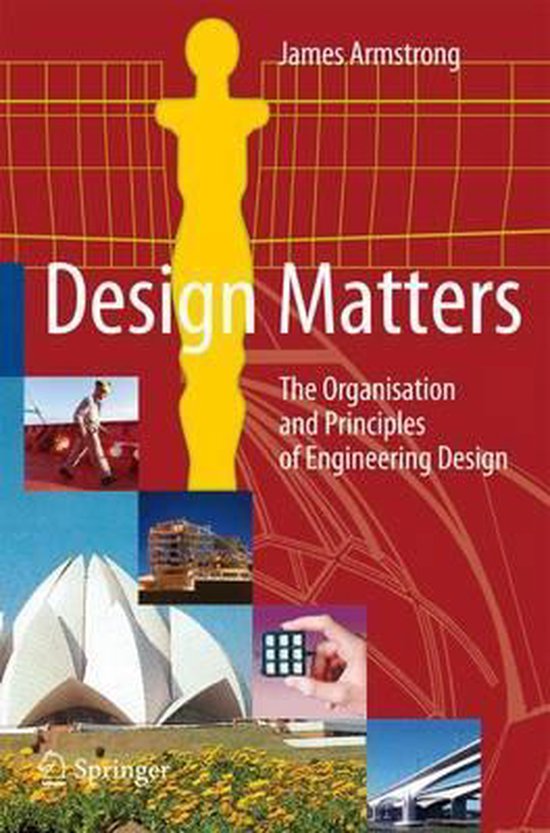
Design Matters
James Armstrong
- 13 oktober 2010
- 9781849965958
Samenvatting:
and, award winning medical engineering techniques.
This book is ideal for graduate students wanting a practical introduction to the design process and engineers who wish to learn more about how design engineering works in practice.
Design is the essential component of engineering. Design Matters demonstrates the need to understand the context, process and delivery of engineering projects and services by focusing on the nature and practice of engineering design. The book specifically highlights the cultural, economic, political and social parameters and illustrates the importance of their understanding as demonstrated by successful designers.
Unique to Design Matters are case studies that demonstrate the principles described in the book and the importance of using multidisciplinary teams to achieve effective design development. Contributions are included from key professionals involved in several high-profile and innovative civil and industrial engineering projects, including:
- A Diagnostic Analyser, Northern Ireland
- A Foot Prosthesis, UK
- The Channel Tunnel Terminal, UK
- The Channel Tunnel Rail Link, UK
- The London Eye, London
- The Lesotho Hydro-electric Project, Natal
- An Australian Timber Arch Bridge, Melbourne
- The Bahaii Temple, New Delhi, India
- The Hampden Gurney Primary School, London
- The Bridge Academy Secondary School, London
- The Harris-Manchester College, Oxford
- The Angel of the North, Gateshead, UK
Design Matters is an ideal text for graduate students in all branches of engineering looking to gain a practical introduction to the breadth and depth of the design process as well as to practicing engineers who wish to gain further insight into how design engineering works strategically.
James Armstrong is an internationally-known consulting engineer, a Fellow of the Royal Academy of Engineering and a past president of the Institution of Structural Engineers. He was responsible for the design and planning of such world-class projects as the Channel Tunnel Terminal works, the Falkland Islands airport and the University of Surrey, UK. In academia he has taught as a visiting professor at universities in the UK, United States, South Africa, Australia and New Zealand. He has travelled and lectured widely, in Russia, Romania, Brazil, India, Nepal, Sri Lanka, Singapore and Hong Kong.