
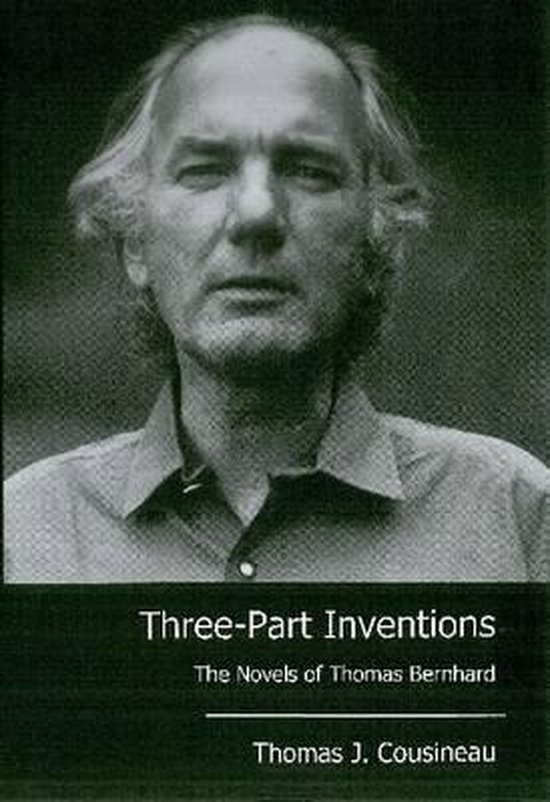
Three-part Inventions
Thomas J. Cousineau
- 15 juli 2008
- 9780874130188
Samenvatting:
The epigraph to Austrian writer Thomas Bernhard's masterpiece, a novel entitled Correction , reads: 'A body needs at least three points of support, not in a straight line, to fix its position'. Three-Part Inventions finds in this simple geometrical axiom a surprisingly complex key to an understanding of Bernhard's major novels, beginning with his first 'fugal' novel, The Lime Works , and ending with the posthumously published Extinction . It argues that each of them, although firmly anchored in Austrian history, emerges from an archetypal story involving a trio of figures: a protagonist who, having been deprived of a desired object by a more powerful adversary, displaces his frustration on a scapegoat who suffers in his place. It further shows that Bernhard transforms this destructive protagonist-adversary-scapegoat pattern into a creative trio formed by the author himself, the artistic precursors who serve as his models, and the readers who receive the finished work.