
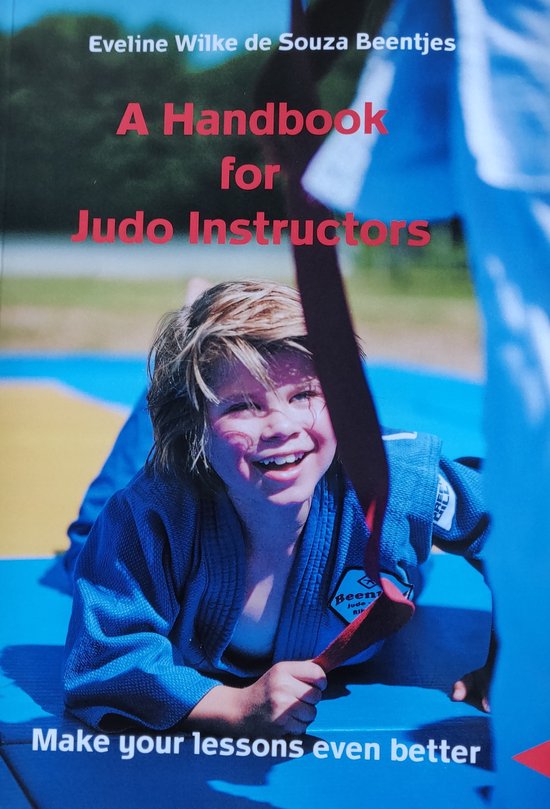
A Handbook for judo instructors
Eveline Wilke de Souza Beentjes
- 05 augustus 2021
- 9789464370911
Samenvatting:
The handbook contains judo related exercises using attributes. They are fun exercises challenging for adults as well.
In the book exercises are discribed together with more than 300 picures.
An experienced judo instructor may know how to lay a solid foundation to train a great judoka, but a challenge remains: how to present the material effectively.
As instructors, we strive to implement the most exciting and effective methods possible in presenting lessons, for the teacher and judoka alike.
This book aims to support optimal talent development for all groups, whether that be young, old, competitive or recreational. This improves the quality of physical activity and keeps the sport fun for all of these diverse groups.
This book will also be focusing on adaptive training or improving at judo by customizing exercises. There will be variation within exercises, experiences, and materials.
There will be 8 important forms of physical activities and competencies in this book that are woven into the sport of judo. These 8 forms are as follows: getting used to physical contact, working together, kumi kata, reaction skills, physical discovery, forms of randori, balance, and ukemi waza.
The eight movements and competencies
The following outline contains eight movements and abilities that appear in judo. I aim to cover all of them in this book.
There are many different exercises listed to achieve each of these.
- Getting used to physical contact
There is no escaping physical contact in judo. However, not everyone is comfortable or used to this concept. These days, with technology, physically touching one another can be unfamiliar. For example, we now often text each other instead of having an in-person conversation. Therefore, jumping onto the mat and touching each other can take some getting used to. You might notice that the +15 category can get over this hurdle much more easily than the younger children.
Young kids that already regularly play physically with their parents or siblings clearly may not have as much trouble with this.
- Ukemi Waza
Around 39,000 children annually between 8 and 12 years old end up in urgent care after a fall. This makes a case for teaching judo in elementary school so that children can at least learn to fall correctly. A smaller child is closer to the ground and therefore doesn’t fall as hard as a larger and heavier person. If a judoka regularly falls incorrectly, their trust in themself may diminish and there is a larger chance that they will get injured. A judoka can then create unnecessary tension in their body which further increases the chance of a dangerous fall.
Judokas learn to not fall on their heads, and to fall using their arms and legs. “Don’t break your arm, break your fall!” is a good saying to go by.
Children will obviously grow up falling and getting up again, but we can do everything we can to ensure they don’t get seriously injured along the way. With adults, falling can turn into a big deal if they started judo at a later age. If you ensure to always give attention to teaching how to fall properly, however, you will see that even adults can build up trust in themselves and will enjoy judo more. Falling should never be painful.
- Working Together
It is important when working together that everyone shares the same goal. The goal of judo comes into view here: exert the least amount of effort to achieve the best possible result. In many cases, this happens best with teamwork. It is good to point this out to students; don’t work against each other, work with each other!
There are many sports that you can do as a team or individually, but it is especially important to learn to work together in judo.
Judo is a duet. You need a partner in judo; you can’t do it alone. Every tori needs their uke.
- Balance
When you think of balance, you might think about physical and mental balance in sports. This is obviously important, though the balance between sport and sufficient rest and a healthy diet must also be found. In this book, we will talk about balance in its most literal sense. Many judokas may be more comfortable and coordinated with one side of their body than the other, and their posture may therefore not be good. They may walk crooked or have back pain, for example.
By training muscles to increase balance, you also decrease the risk of injury. In judo, it is clearly extremely important to have good balance and stability. You yourself must first be balanced before you can throw somebody else.
There is a difference between exercises for balance and for stability. For balance, the aim is to not move while supporting weight.
Stability exercises involve movement. The goal here is also to stay balanced, however. Further in this book you will find fun and educational exercises. Doing balance and stability exercises together is the most fun!
- Reaction Skills
Reaction speed refers to the amount of time between observing something and reacting to it. Our reaction speed has to do with our own personal observations. What do we see, hear, and feel?
The process then begins. Do you understand what you see, hear, or feel? After this comprehension comes action, but how can our motor skills function so that we react both quickly and accurately?
- Physical Discovery
Physical development plays the greatest role in the first four years of life. This development depends a lot on natural talent, but the environment and surroundings of someone influence this as well. You might notice whether or not parents have been physically playing with their kids from a young age from the moment they step on the mat.
In this book we cover exercises for general and fine motor skills. General skills include balance, body coordination, and movement. Fine motor skills are more about how the hands should function.
In the kumi kata (gripping) section, there are a few fun exercises to increase the functionality of the hands. Children develop their motor skills very well with judo because all aspects are needed in judo.
- Kumi Kata
All real judo exercises start with a good kumi kata, or grip. The outcome of competitions is often decided by a good or bad grip. At young ages, kumi kata often doesn’t receive much attention. With fun grip games, though, you can instil the principles of kimi kata in everyone.
- Randori form
When choosing how to go about randori, the relationship with the competition is crucial. The character of the competition should be thought about. The randori form is one of the most important forms for competing judokas because it is the most similar to a real competition.
By altering randori, you can discover a judoka’s preferred techniques and disciplines both on and off the mat.
You can order the book at bol.com or on the website www.beentjesjudosport.nl webshop.