
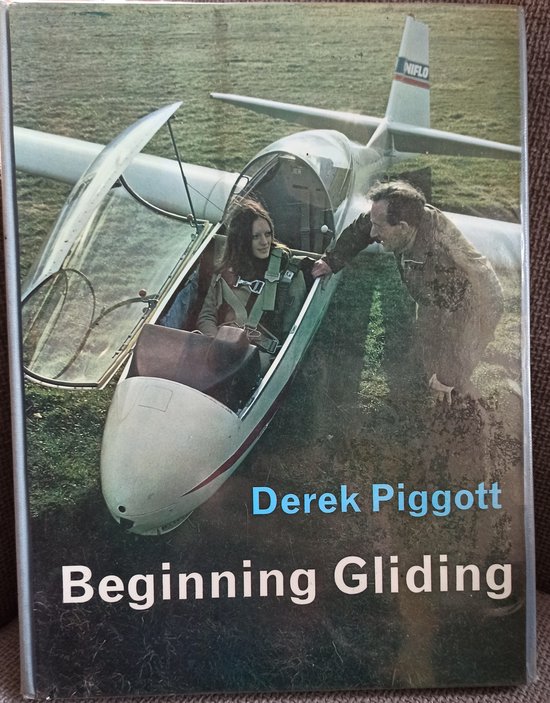
Beginning Gliding
Derek Piggott
- 01 juni 1975
- 9780713615784
Samenvatting:
In Britain it is customary to use the word glider whereas in many other countries the same aircraft are more commonly known as sailplanes. Both are correct. By definition, every motorless aircraft is a glider, but a sailplane is a glider for soaring flight. Most of us visualise a sailplane as a beautifully designed modern machine but even a Primary glider or the Rogallo type of hang glider is really a sailplane since it is designed for, and is capable of, long soaring flights. Probably the only gliders which are not sailplanes are some of the flying devices which are dropped from high flying aircraft for research purposes and, of course, the heavy military troop-carrying gliders of the Second World War. For the purposes of this book I prefer to use the word glide in connection with learning to fly a glider or sailplane. Soaring is only one aspect of gliding and is by no means the most important. Safe gliding is a matter of basic flying skills and an understanding of glider flying. These are the foundations of soaring flight. Many readers will not be familiar with the use of knots (nautical miles per hour) as a unit of speed in connection with flying. A knot is almost exactly 1oo feet per minute and this makes it particularly useful for glider flying where the pilot may want to estimate his gliding angle quickly. For example, a rate of descent of 2 knots at a speed of 60 knots indicates a gliding angle of 1: 30 in no wind. The same calculation with the variometer calibrated in feet or metres a second and speeds of miles or kilometres per hour requires a mental calculation involving multiplying by 6o twice, and this is not practical for the average pilot in flight. It seems probable that in spite of the move towards metrication, discriminating glider pilots will continue to use knots and nautical miles for measurement, at least in countries where heights are referred to in hundreds and thousands of feet. The nautical mile has the added advantage of being one minute of latitude and this enables a pilot to measure or estimate distances on any map or chart by referring to the distance between lines of latitude, instead of having to find the scale — which may be inaccessible at the time. Conversion tables are given in Appendix C.