
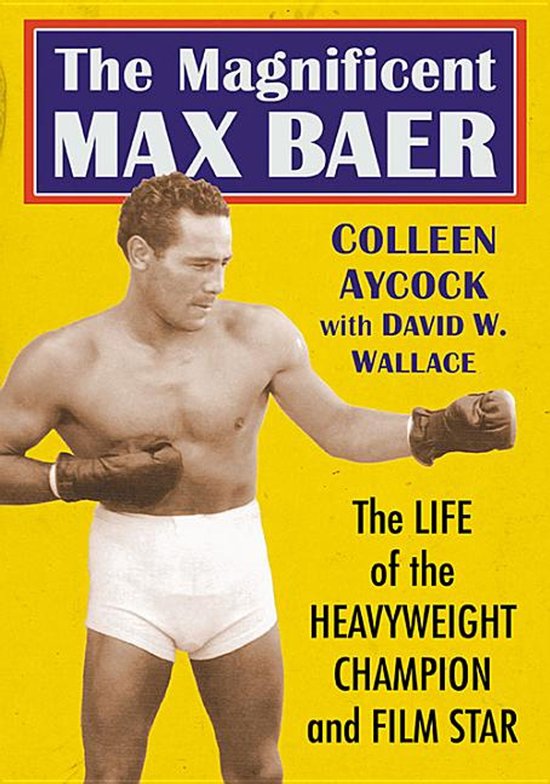
The Magnificent Max Baer
Colleen Aycock
- 20 augustus 2018
- 9781476671611
Samenvatting:
California's ""Glamour Boy"" and world champion boxer was a movie attraction for women and a money-making draw for promoters during the Great Depression. This is the first complete biography to cover Max Baer's boxing record; his early family life; his film, stage, television, and radio careers; and his WW II Army service.
Boxing might not have survived the 1930s if not for Max Baer. A contender for every heavyweight championship 1932-1941, California's "Glamour Boy" brought back the "million-dollar gate" not seen since the 1920s. His radio voice sold millions of Gillette razor blades; his leading-man appeal made him a heartthrob in The Prizefighter and the Lady (1933). The film was banned in Nazi Germany--Baer had worn a Star of David on his trunks when he TKOed German former champ Max Schmeling.
Baer defeated 275-pound Primo Carnera in 1934 for the championship, losing it to Jim Braddock the next year. Contrary to Cinderella Man, (2005), Baer--favored 10 to 1--was not a villain and the fight was more controversial than the film suggested. His battle with Joe Louis three months later drew the highest gate of the decade.
This first comprehensive biography covers Baer's complete ring record, his early life, his career on radio, film, stage and television, and his World War II army service.