
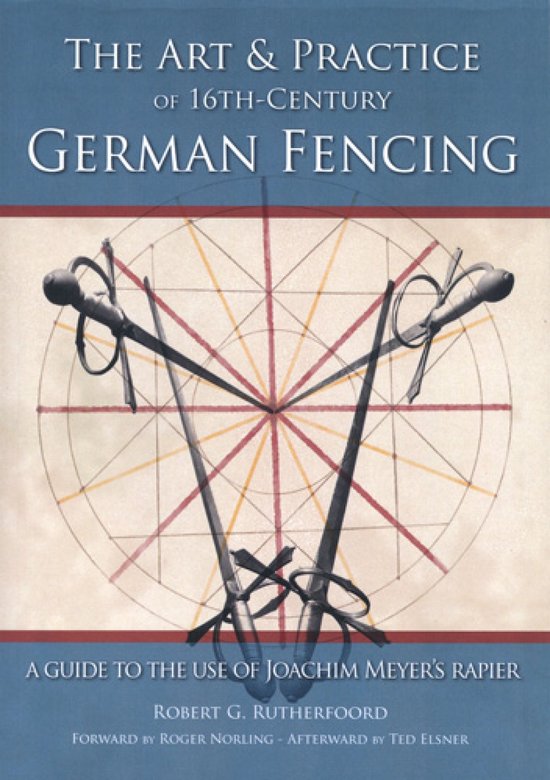
Art and Practice of 16th-Century German Fencing
Robert Rutherfoord
- 03 november 2020
- 9781937439385
Samenvatting:
Joachim Meyer (ca. 1537 - 1571) was one of the most influential fencing masters of the Renaissance—a prolific writer of fencing manuals. In Art and Practice of 16th-Century German Fencing Robert Rutherfoord unpacks the complex and elegant art of Meyer's rapier in word and image, including over 200 "first person perspective" illustrations.
Joachim Meyer (ca. 1537 - 1571) was one of the most influential fencing masters of the Renaissance--a prolific writer of fencing manuals. In this training guide, Robert Rutherfoord unpacks the complex and elegant art of Meyer's rapier in word and image, including over 200 easy to follow illustrations to bring the art to life.
Meyer's monumental "A Thorough Description of the Free, Chivalric, and Noble Art of Fencing, Showing Various Customary Defenses, Affected and Put Forth with Many Handsome and Useful Drawings" was reprinted, adapted and outright plagiarized for over a century after his death. As a martial artist, he was both the last great master of the medieval Liechtenauer fencing tradition and a young innovator, who combined his native, German traditions with those of the Italian and Spanish fencing masters to create a wholly unique systems of fighting with a vast number of weapons. The centrepiece of his work, however, was the cut-and-thrust "sidesword" or "early rapier" which was rapidly eclipsing the knightly two-handed longsword in popularity. Meyer's synthesis not only adapted his native art to this Mediterranean weapon, but in some cases, his innovations prefigured the developments of rapier fencing that Italian masters would promote in the next quarter century after his untimely death.