
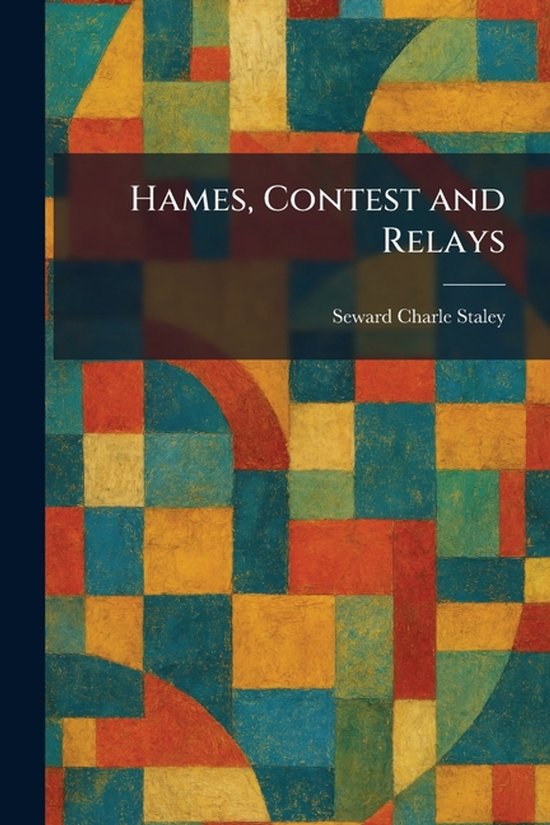
Hames, Contest and Relays
Seward Charle Staley
- 14 februari 2026
- 9781025700250
Samenvatting:
"Hames, Contest and Relays" is a comprehensive and practical guide to organized physical activities, designed for use in schools, colleges, and community programs. This work serves as an essential resource for instructors and leaders looking to foster teamwork, fitness, and healthy competition through structured play. The volume is meticulously organized into sections covering individual and group contests, various types of relay races, and games suited for different ages and environments.Each activity is described with clarity, outlining rules, equipment needs, and pedagogical benefits. Seward Charle Staley emphasizes the importance of play in physical development and social coordination, providing hundreds of variations to keep participants engaged. From simple recreational matches to intense competitive relays, the text captures the spirit of early 20th-century physical culture while remaining a valuable reference for modern educators and sports enthusiasts. It offers a deep dive into the evolution of athletic training and the timeless appeal of group dynamics in sport, making it a cornerstone for anyone interested in the history and practice of physical education.This work has been selected by scholars as being culturally important, and is part of the knowledge base of civilization as we know it. This work was reproduced from the original artifact, and remains as true to the original work as possible. Therefore, you may see the original copyright references, library stamps (as most of these works have been housed in our most important libraries around the world), and other notations in the work.This work is in the public domain in the United States of America, and possibly other nations. Within the United States, you may freely copy and distribute this work, as no entity (individual or corporate) has a copyright on the body of the work.As a reproduction of a historical artifact, this work may contain missing or blurred pages, poor pictures, errant marks, etc. Scholars believe, and we concur, that this work is important enough to be preserved, reproduced, and made generally available to the public. We appreciate your support of the preservation process, and thank you for being an important part of keeping this knowledge alive and relevant.