
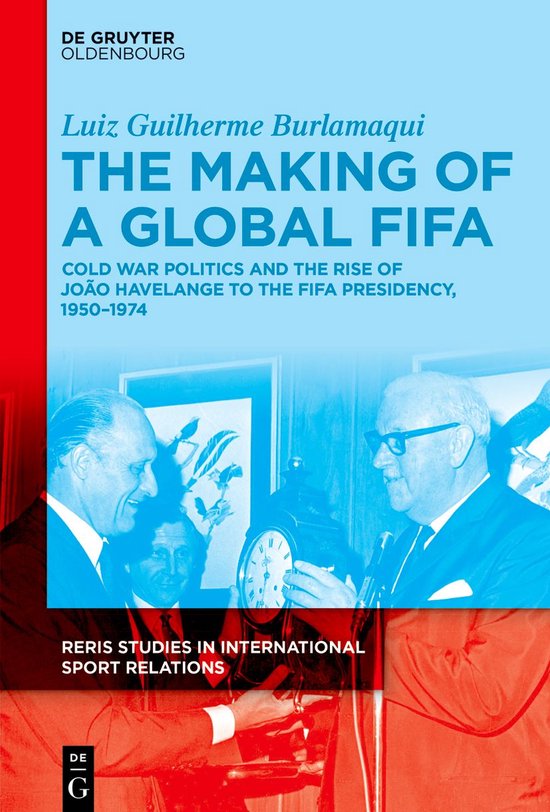
RERIS Studies in International Sport Relations1-The Making o ...
Luiz Burlamaqui
- 20 februari 2023
- 9783110759686
Samenvatting:
In 1974, the Brazilian sports official Joo Havelange was elected FIFA’s president in a two-round election, defeating the incumbent Stanley Rous. The story told by Havelange himself describes a private odyssey in which the protagonist crisscrosses two thirds of the world canvassing for votes and challenging the institutional status quo. For many scholars, Havelange’s triumph changed FIFA’s identity, gradually turning it into a global and immensely wealthy institution. Conversely, the election can be analyzed as a historical event. It can be thought of as a political window by means of which the international dynamic of a specific moment in the Cold War can be perceived. In this regard, this book seeks to understand which actors were involved in the election, how the networks were shaped, and which political agents were directly engaged in the campaign.
Luiz Guilherme Burlamaqui’s book sheds original light on an institution that is often analysed in the field of sports history, but whose leaders are still little known. Based on research in completely original archives (notably outside from Europe), Luiz Burlamaqui invites us to better understand the trajectory of Joao Havelange, one of the most influential sports leaders of the 20th century and surely one of the most active promoters of the commercialisation of the game. A valuable read for scholars, students in Sport history and in Business history, and also obviously for football enthusiasts. – Gregor Quin, University of Lausanne