
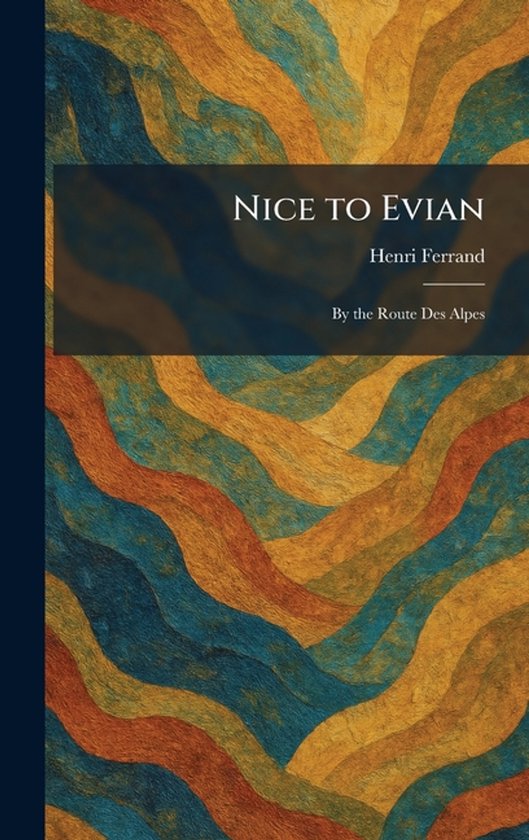
Nice to Evian
Henri Ferrand
- 14 februari 2026
- 9781025866161
Samenvatting:
"Nice to Evian: By the Route Des Alpes" is a captivating travelogue that invites readers on a scenic journey through the heart of the French Alps. Penned by the esteemed mountain enthusiast and author Henri Ferrand, the work traces the legendary Route des Alpes, a spectacular passage stretching from the Mediterranean coast at Nice to the shores of Lake Geneva at Evian-les-Bains. Ferrand provides a detailed exploration of the majestic peaks, verdant valleys, and historic villages that define this iconic alpine landscape.The narrative captures the essence of early 20th-century exploration, blending geographical precision with a profound appreciation for natural beauty. As readers traverse the high passes and rugged terrain, they encounter the unique culture and heritage of the region. "Nice to Evian: By the Route Des Alpes" serves as both a historical record of European travel and a tribute to the enduring allure of the mountains. With its rich descriptions of the snowy summits of the Dauphiné and the serene waters of Savoie, the book remains a valuable resource for those interested in the history of mountaineering, regional French geography, and the evolution of alpine tourism. Ferrand's expertise and passion ensure a literary journey that is as informative as it is evocative.This work has been selected by scholars as being culturally important, and is part of the knowledge base of civilization as we know it. This work was reproduced from the original artifact, and remains as true to the original work as possible. Therefore, you may see the original copyright references, library stamps (as most of these works have been housed in our most important libraries around the world), and other notations in the work.This work is in the public domain in the United States of America, and possibly other nations. Within the United States, you may freely copy and distribute this work, as no entity (individual or corporate) has a copyright on the body of the work.As a reproduction of a historical artifact, this work may contain missing or blurred pages, poor pictures, errant marks, etc. Scholars believe, and we concur, that this work is important enough to be preserved, reproduced, and made generally available to the public. We appreciate your support of the preservation process, and thank you for being an important part of keeping this knowledge alive and relevant.