
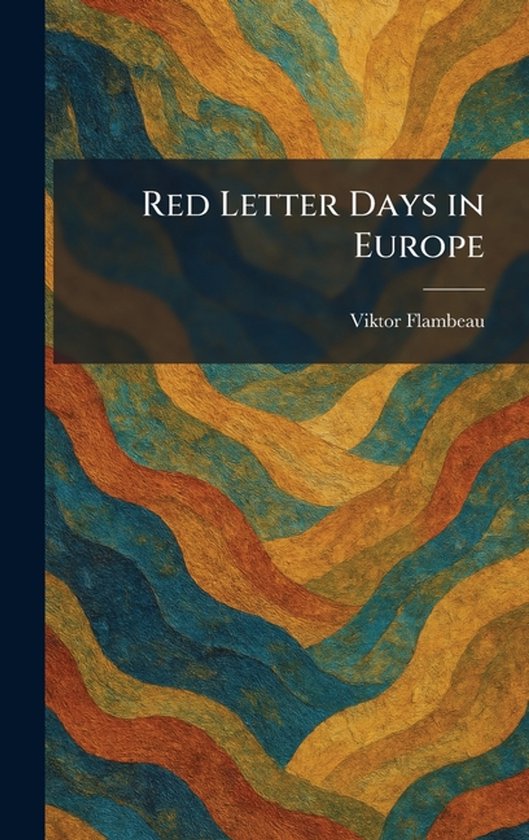
Red Letter Days in Europe
Viktor Flambeau
- 14 februari 2026
- 9781025322179
Samenvatting:
"Red Letter Days in Europe" is an evocative travel narrative that captures the spirit of early 20th-century Europe through the eyes of Viktor Flambeau, a seasoned observer of culture and art. Written during the interwar period, this work offers a vivid exploration of the continent's diverse landscapes, traditions, and historical landmarks. From the bustling streets of major capitals to the quiet charm of remote villages, Flambeau chronicles a series of memorable experiences and festive occasions-the "red letter days"-that define the European identity of the era.The text serves as both a geographical guide and a cultural study, providing insightful commentary on the art, architecture, and social customs encountered along the journey. Readers are invited to rediscover a world in transition, where the echoes of the past meet the burgeoning modernity of the 1920s. With its engaging prose and keen attention to detail, "Red Letter Days in Europe" remains a valuable historical document and a testament to the enduring allure of European travel. It provides a unique window into the social fabric and artistic heritage of a continent recovering and redefining itself in a time of significant global change.This work has been selected by scholars as being culturally important, and is part of the knowledge base of civilization as we know it. This work was reproduced from the original artifact, and remains as true to the original work as possible. Therefore, you may see the original copyright references, library stamps (as most of these works have been housed in our most important libraries around the world), and other notations in the work.This work is in the public domain in the United States of America, and possibly other nations. Within the United States, you may freely copy and distribute this work, as no entity (individual or corporate) has a copyright on the body of the work.As a reproduction of a historical artifact, this work may contain missing or blurred pages, poor pictures, errant marks, etc. Scholars believe, and we concur, that this work is important enough to be preserved, reproduced, and made generally available to the public. We appreciate your support of the preservation process, and thank you for being an important part of keeping this knowledge alive and relevant.