
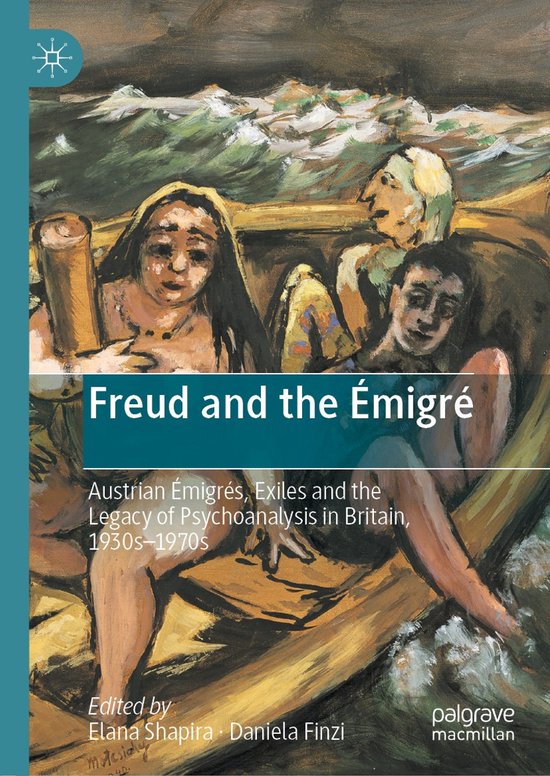
Freud and the Emigre
Elana Shapira, Daniela Finzi
- 23 december 2020
- 9783030517861
Samenvatting:
This book reconsiders standard narratives regarding Austrian émigrés and exiles to Britain by addressing the seminal role of Sigmund Freud and his writings, and the critical part played by his contemporaries, in the construction of a method promoting humanized relations between individual and society and subjectivity and culture.
This collection of essays presents new perspectives on Freud’s role in the lives of Austrian émigrés and exiles in Britain from the 1930s to the 1970s. It explores the creative ways in which authors, art historians, psychoanalysts, sociologists and artists accessed Freudian thinking and fashioned their own Freudian languages. Above all, the book seeks to examine the influence of Freud on the scientific and creative writing of émigrés and exiles, as well as on their professional positioning in British society. It probes the collective attempt to fashion an imagined ‘Viennese community’, represented through the promotion of a humanised language and a progressive social engagement. Moving beyond narrow understandings of psychoanalysis either as therapy or intellectual paradigm, the volume explores its broader cultural roles. By exploring psychoanalysis in terms of its specific cultural relationship with Austria, as well as Britain, the chapters show how psychoanalysis also created connections between the two countries in the immediate postwar period.