
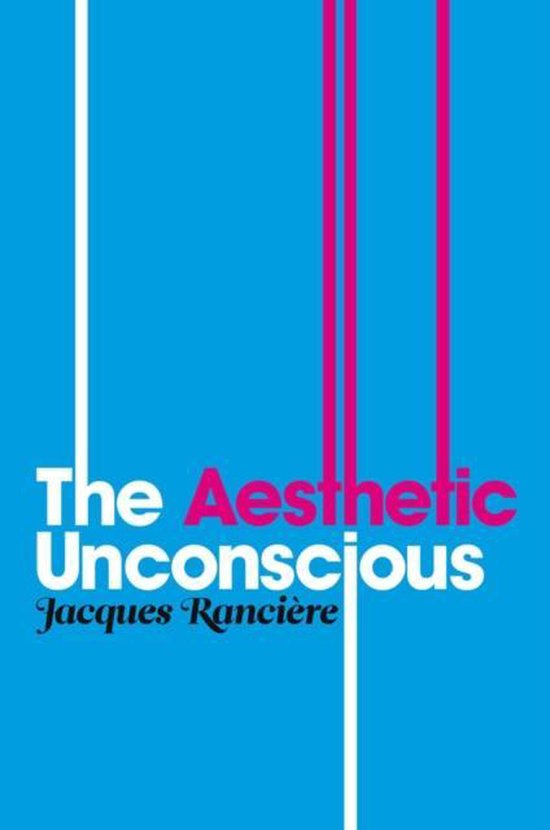
Aesthetic Unconscious
Jacques Ranciere
- 18 december 2009
- 9780745646442
Samenvatting:
A work that is not concerned with the use of Freudian concepts for the interpretation of literary and artistic works. Rather, it is concerned with why this interpretation plays such an important role in demonstrating the contemporary relevance of psychoanalytic concepts.
This book is not concerned with the use of Freudian concepts for the interpretation of literary and artistic works. Rather, it is concerned with why this interpretation plays such an important role in demonstrating the contemporary relevance of psychoanalytic concepts.
In order for Freud to use the Oedipus complex as a means for the interpretation of texts, it was necessary first of all for a particular notion of Oedipus, belonging to the Romantic reinvention of Greek antiquity, to have produced a certain idea of the power of that thought which does not think, and the power of that speech which remains silent.
From this it does not follow that the Freudian unconscious was already prefigured by the aesthetic unconscious. Freud's 'aesthetic' analyses reveal instead a tension between the two forms of unconscious. In this concise and brilliant text Rancière brings out this tension and shows us what is at stake in this confrontation.
This book is not concerned with the use of Freudian concepts for the interpretation of literary and artistic works. Rather, it is concerned with why this interpretation plays such an important role in demonstrating the contemporary relevance of psychoanalytic concepts.
In order for Freud to use the Oedipus complex as a means for the interpretation of texts, it was necessary first of all for a particular notion of Oedipus, belonging to the Romantic reinvention of Greek antiquity, to have produced a certain idea of the power of that thought which does not think, and the power of that speech which remains silent.
From this it does not follow that the Freudian unconscious was already prefigured by the aesthetic unconscious. Freud's 'aesthetic' analyses reveal instead a tension between the two forms of unconscious. In this concise and brilliant text Rancière brings out this tension and shows us what is at stake in this confrontation.