
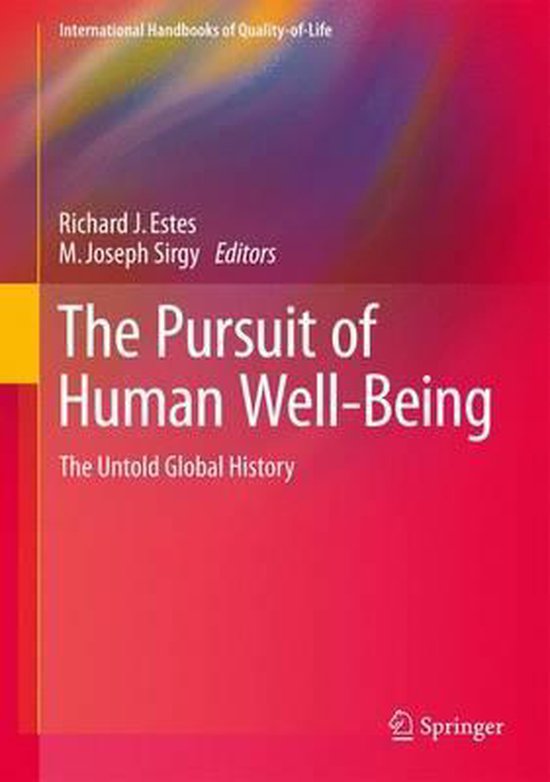
The Pursuit of Human Well Being
Estes
- 03 april 2018
- 9783319416410
Samenvatting:
This handbook informs the reader about how much progress we, the human race, have made in enhancing the quality of life on this planet. Many skeptics focus on how the quality of life has deteriorated over the course of human history, particularly given World War II and its aftermath. This handbook provides a positive perspective on the history of well-being. Quality of life, as documented by scientists worldwide, has significantly improved. Nevertheless, one sees more improvements in well-being in some regions of the world than in others. Why? This handbook documents the progress of well-being in the various world regions as well as the differences in those regions. The broad questions that the handbook addresses include:
- What does well-being mean?
- How do different philosophical and religious traditions interpret the concept of well-being within their own context
- Has well-being remained the same over different historical epochs and for different regions and subregions of the world?
- In which areas of human development have we been most successful in advancing individual and collective well-being? In which sectors has the attainment of well-being proven most difficult?
- How does well-being differ within and between different populations groups that, for a variety of socially created reasons, have been the most disadvantaged (e.g., children, the aged, women, the poor, racial, ethnic, and sexual minorities)?
This handbook informs the reader about how much progress we, the human race, have made in enhancing the quality of life on this planet. Many skeptics focus on how the quality of life has deteriorated over the course of human history, particularly given World War II and its aftermath. This handbook provides a positive perspective on the history of well-being. Quality of life, as documented by scientists worldwide, has significantly improved. Nevertheless, one sees more improvements in well-being in some regions of the world than in others. Why? This handbook documents the progress of well-being in the various world regions as well as the differences in those regions. The broad questions that the handbook addresses include:
- What does well-being mean?
- How do different philosophical and religious traditions interpret the concept of well-being within their own context?
- Has well-being remained the same over different historical epochs and for different regions and subregions of the world?
- In which areas of human development have we been most successful in advancing individual and collective well-being? In which sectors has the attainment of well-being proven most difficult?
- How does well-being differ within and between different populations groups that, for a variety of socially created reasons, have been the most disadvantaged (e.g., children, the aged, women, the poor, racial, ethnic, and sexual minorities)?
€ 325,-
Bestel bij Bol.com >