
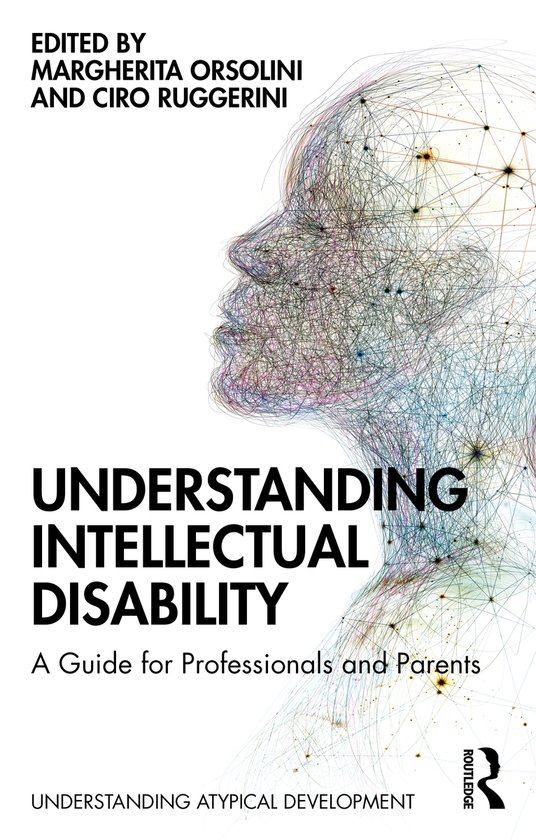
Understanding Atypical Development- Understanding Intellectu ...
Margherita Orsolini
- 26 december 2022
- 9781032115399
Samenvatting:
This book provides a novel approach to understanding children who have been diagnosed with intellectual disabilities (ID). This book explores the signs, symptoms and diagnosis of ID, together with dynamic perspectives on assessment, and consideration of treatment, therapy, and interventions for those living with the condition.
Understanding Intellectual Disability: A Guide for Professionals and Parents supports professionals and parents in understanding critical concepts, correct assessment procedures, delicate and science-infused communication practices and treatment methods concerning children with intellectual disabilities.
From a professional perspective, this book relies on developmental neuropsychology and psychiatry to describe relevant measures and qualitative observations when making a diagnosis and explores the importance of involving parents in the reconstruction of a child’s developmental history. From a parent’s perspective, the book shows how enriched environments can empower children’s learning processes, and how working with patients, families, and organizations providing care and treatment services can be effectively integrated with attachment theory. Throughout seven chapters, the book offers an exploration of diagnostic procedures, new insights on the concept of intelligence and the role of communication and secure attachment in the mind’s construction. With expertise from noteworthy scholars in the field, the reader is given an overview of in-depth assessment and intervention practices illustrated by several case studies and examples, as well as a lifespan perspective from a Human Rights Model of disability.
Understanding Intellectual Disability is an accessible guide offering an up-to-date vision of intellectual disability and is essential for psychologists, health care professionals, special educators, students in clinical psychology, and parents.
Things are connected through invisible bonds: you cannot pluck a flower without unsettling a star.
Galileo Galilei