
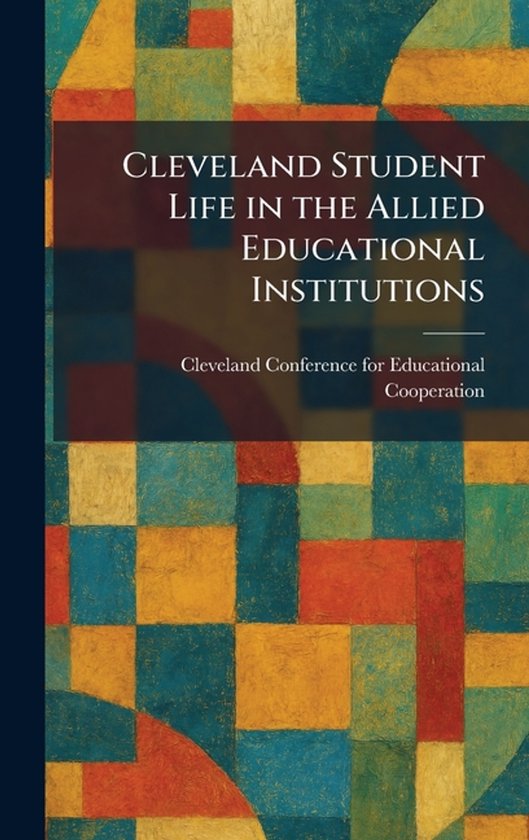
Cleveland Student Life in the Allied Educational Institution ...
- 14 februari 2026
- 9781025557069
Samenvatting:
"Cleveland Student Life in the Allied Educational Institutions" offers a comprehensive examination of the academic and social landscape within the collaborative educational network of Cleveland, Ohio, during the early 20th century. Prepared by the Cleveland Conference for Educational Cooperation, this work delves into the multifaceted experiences of students attending various allied institutions, including universities, libraries, museums, and technical schools.The text explores the synergistic relationships between these entities and how their combined resources shaped the educational opportunities available to the community. It provides detailed insights into student demographics, living conditions, extracurricular activities, and the administrative structures that facilitated inter-institutional harmony. By documenting the cooperation between diverse organizations, the report illustrates a unique model for regional academic development and civic engagement.As a significant historical document, this work captures a pivotal moment in urban educational planning and public service. It highlights pioneering efforts to create a cohesive and accessible intellectual environment, making it an invaluable resource for researchers of educational history, urban sociology, and the evolution of American civic institutions.This work has been selected by scholars as being culturally important, and is part of the knowledge base of civilization as we know it. This work was reproduced from the original artifact, and remains as true to the original work as possible. Therefore, you may see the original copyright references, library stamps (as most of these works have been housed in our most important libraries around the world), and other notations in the work.This work is in the public domain in the United States of America, and possibly other nations. Within the United States, you may freely copy and distribute this work, as no entity (individual or corporate) has a copyright on the body of the work.As a reproduction of a historical artifact, this work may contain missing or blurred pages, poor pictures, errant marks, etc. Scholars believe, and we concur, that this work is important enough to be preserved, reproduced, and made generally available to the public. We appreciate your support of the preservation process, and thank you for being an important part of keeping this knowledge alive and relevant.