
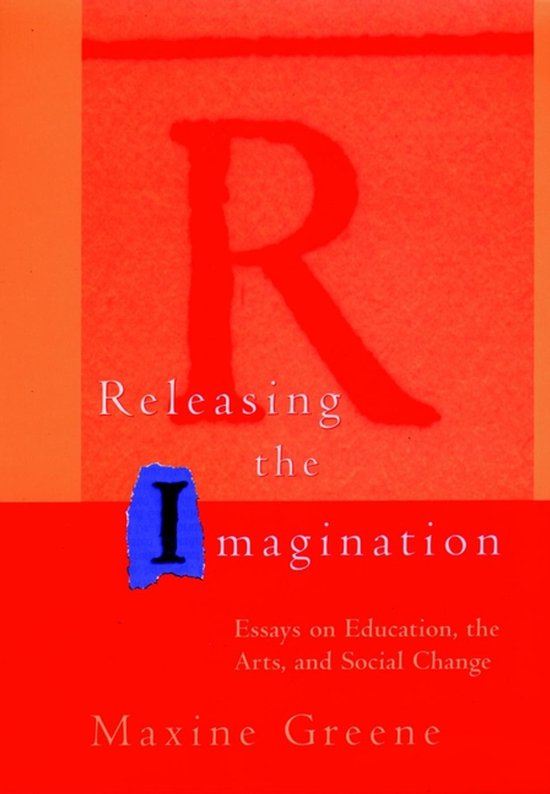
Releasing the Imagination
Maxine Greene
- 29 juni 1995
- 9780787900816
Samenvatting:
The author believes that it is imagination that opens our eyes to worlds beyond our experience - enabling us to create, care for others, and envision social change. A presentation of the critical role of imagination in cognitive and other models of learning is presented in this text.
"Releasing the Imagination gives us a vivid portrait of the possibilities of human experience and education's role in its realization. It is a welcome corrective to current pressures for educational conformity."--Elliot W. Eisner, professor of education and art, Stanford UniversityRuminating on themes such as literacy, the arts and aesthetics, pluralism, multiculturalism, and the tensions and passions of caring, Greene carefully considers both the realities of hard economic times and the human requirement for expressiveness. From an account of school restructuring to a rendering of the shapes of literacy, Greene's essays examine the potential releases of imagination in a variety of contexts--in connection with the arts, and in connection with the community that, she hopes, "will some day be called democracy."
Now in Paperback
"This remarkable set of essays defines the role of imagination ingeneral education, arts education, aesthetics, literature, and thesocial and multicultural context.... The author argues for schoolsto be restructured as places where students reach out for meaningsand where the previously silenced or unheard may have a voice. Sheinvites readers to develop processes to enhance and cultivate theirown visions through the application of imagination and the arts.Releasing the Imagination should be required reading for alleducators, particularly those in teacher education, and for generaland academic readers."
--Choice
"Maxine Greene, with her customary eloquence, makes an impassionedargument for using the arts as a tool for opening minds and forbreaking down the barriers to imagining the realities of worldsother than our own familiar cultures.... There is a strong rhythmto the thoughts, the arguments, and the entire sequence of essayspresented here."
--American Journal of Education