
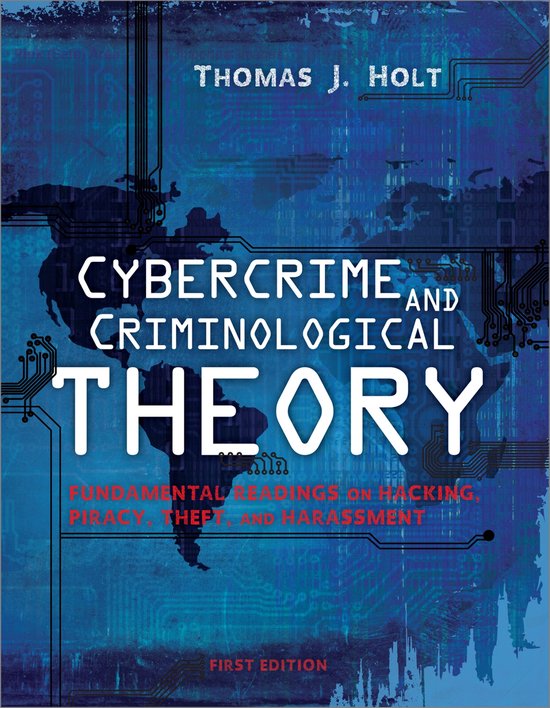
Cybercrime and Criminological Theory
Thomas J. Holt
- 24 oktober 2012
- 9781609274962
Samenvatting:
Computers and the Internet play an increasingly pivotal role in daily life, making it vitally important to understand the dynamics of cybercrime and those victimized by it. This anthology explores the predictors for participation in various forms of cybercrime and deviance, from common problems like media piracy, to more distinct offenses such as computer hacking.
Computers and the Internet play an increasingly pivotal role in daily life, making it vitally important to understand the dynamics of cybercrime and those victimized by it. The anthology Cybercrime and Criminological Theory: Fundamental Readings on Hacking, Piracy, Theft, and Harassment explores the predictors for participation in various forms of cybercrime and deviance, from common problems like media piracy, to more distinct offenses such as computer hacking. Most criminological theories were developed to account for street crimes, so it is unclear how these theories may apply to virtual offending. This text provides critical insight into the utility of multiple theories to account for cybercrimes.
Cybercrime and Criminological Theory gives direct insight into the rates and prevalence of cybercrime offenses using data sets from populations across the United States. It gives readers a fundamental understanding of, and appreciation for various forms of cybercrime, and outlines prospective predictors of both offending and victimization. The selected readings identify research questions that must be addressed in order to improve the legal, technical, and policy responses to cybercrimes.
Cybercrime and Criminological Theory begins with an introduction to cybercrime and virtual criminality. From there, the book offers five sections featuring seminal and cutting edge works on topics in:
- Routine Activities Theory
- Deterrence Theory
- Social Learning and Self Control
- General Strain Theory
- Deviant Subcultures
The book uses articles and cutting-edge research in the field to create a text that is relevant for students at all levels of study, as well as scholars in criminology, sociology, and information security. Undergraduate students will gain insight into the value of various theories to account for victimization and offending, and learn basic research methods applied by criminologists to assess crime and victimization. Graduate students benefit from the detail provided on research methods, measurement, and research questions that must be addressed to fully understand cybercrimes.
Cybercrime and Criminological Theory can be used in courses in Criminology, Criminal Justice and Sociology. It is also useful for studies in network security and information security.