
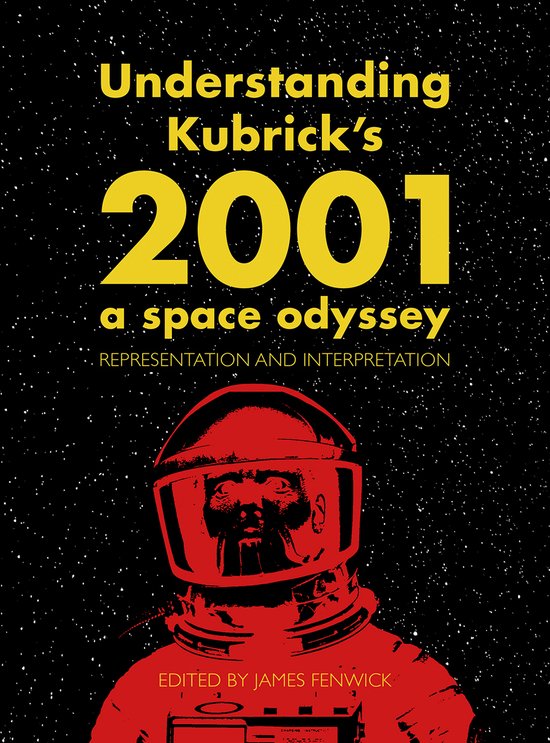
Understanding Kubrick's 2001: A Space Odyssey
Fenwick, James
- 15 juli 2018
- 9781783208630
Samenvatting:
An exploration of Stanley Kubrick’s 2001: A Space Odyssey that combines ‘new’ empirical approaches with ‘old’ formalist approaches. This provides a broader understanding of how Kubrick’s methods as a director and auteur were developed to produce a unique aesthetic creation that is still years ahead in its design, vision and philosophical structure.
Scholars have been studying the films of Stanley Kubrick for decades. This book, however, breaks new ground by bringing together recent empirical approaches to Kubrick with earlier formalist approaches to arrive at a broader understanding of the ways in which Kubrick’s methods were developed to create the unique aesthetic creation that is 2001: A Space Odyssey. More than 50 years after its release, contributors explore the film’s still striking design, vision and philosophical structure, offering new insights and analyses that will give even dedicated Kubrick fans new ways of thinking about the director and his masterpiece.