
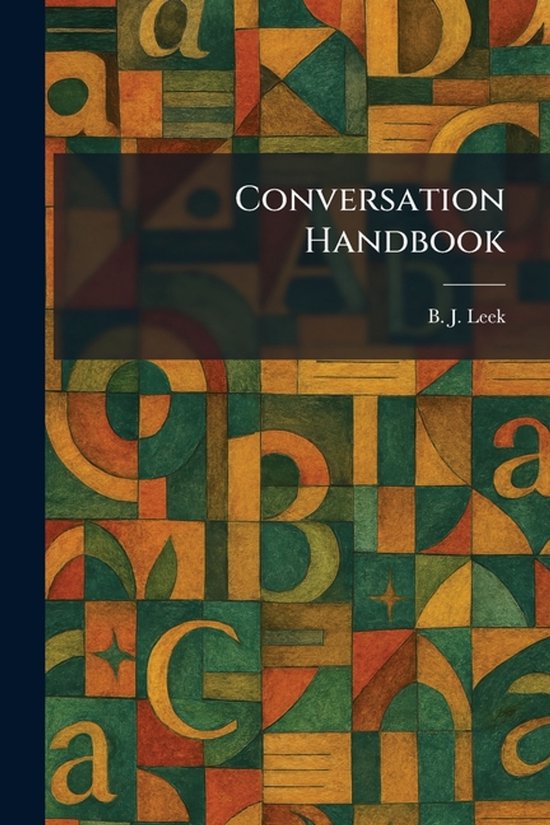
Conversation Handbook
B J Leek
- 14 februari 2026
- 9781025478470
Samenvatting:
"Conversation Handbook" by B. J. Leek is a practical and insightful guide dedicated to the art of verbal interaction and social engagement. In an era where eloquence and social poise were considered essential virtues, this work provides a comprehensive overview of how to conduct oneself in various interpersonal scenarios. The book offers timeless advice on maintaining the flow of dialogue, choosing appropriate topics, and the subtle nuances of listening and responding with grace.Focusing on the psychological and social aspects of human connection, the text serves as a roadmap for navigating everything from formal gatherings to casual social calls. It emphasizes the importance of confidence and clarity, providing readers with strategies to overcome social anxiety and foster meaningful relationships through effective communication. As a reflection of early 20th-century social standards, "Conversation Handbook" remains a valuable resource for those interested in the history of etiquette and the enduring principles of successful conversation.This work has been selected by scholars as being culturally important, and is part of the knowledge base of civilization as we know it. This work was reproduced from the original artifact, and remains as true to the original work as possible. Therefore, you may see the original copyright references, library stamps (as most of these works have been housed in our most important libraries around the world), and other notations in the work.This work is in the public domain in the United States of America, and possibly other nations. Within the United States, you may freely copy and distribute this work, as no entity (individual or corporate) has a copyright on the body of the work.As a reproduction of a historical artifact, this work may contain missing or blurred pages, poor pictures, errant marks, etc. Scholars believe, and we concur, that this work is important enough to be preserved, reproduced, and made generally available to the public. We appreciate your support of the preservation process, and thank you for being an important part of keeping this knowledge alive and relevant.