
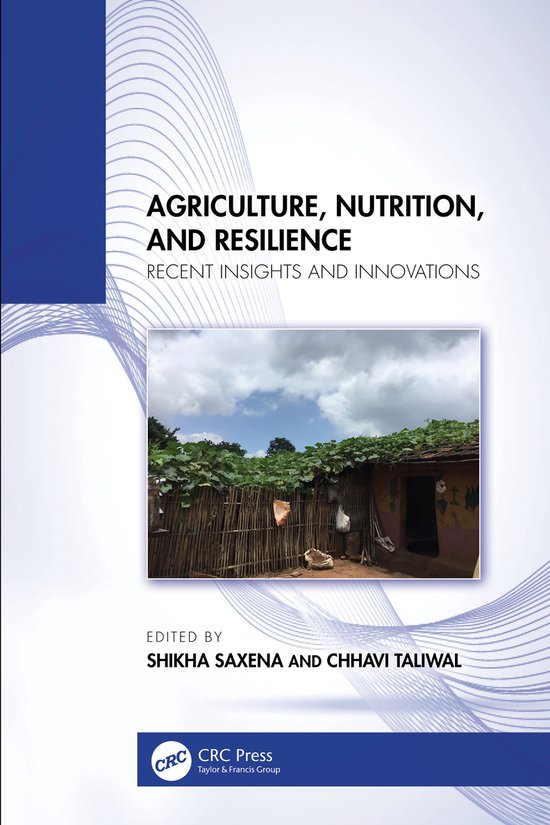
Agriculture, Nutrition, and Resilience
Shikha Saxena
- 09 april 2025
- 9781032782409
Samenvatting:
This book aims to provide a comprehensive analysis of food security by exploring the interconnections between agricultural practices, nutritional status, socioeconomic factors, and technological advancements.
This book aims to provide a comprehensive analysis of food security by exploring the interconnections between agricultural practices, nutritional status, socioeconomic factors, and technological advancements. It addresses the challenges posed by population growth, climate change, and socioeconomic disparities, focusing on sustainable agriculture, equitable access to food, and community resilience. The book integrates insights from multilevel modeling, structural equation modeling, and case studies to highlight effective strategies for combating malnutrition, promoting gender equality, and enhancing food systems. It also emphasizes the importance of policy interventions, community engagement, and innovative technologies in fostering a sustainable, resilient, and equitable global food landscape.
Key features
- Multidisciplinary Approach: Integrates nutrition, agriculture, economics, and gender studies to offer a comprehensive view of food security challenges and solutions.
- Advanced Analytical Methods: Employs multilevel modeling and structural equation modeling to identify key factors affecting child nutrition and the impact of agricultural productivity.
- Focus on Gender Equality: Highlights the critical role of women's health and empowerment in improving food systems and achieving sustainable development goals.
- Practical Solutions: Proposes actionable strategies such as rice fortification and millet promotion, tailored to diverse socioeconomic and climatic conditions.
- Holistic Framework: Combines theoretical insights with real-world applications to create a sustainable, resilient, and equitable global food system.
The target audience for this book includes researchers, policymakers, public health professionals, agricultural and environmental scientists, NGOs, community leaders, students, educators, and development agencies. It provides insights into food security, sustainable agriculture, nutrition, gender equality, and community engagement, making it valuable for those involved in related fields and initiatives.