
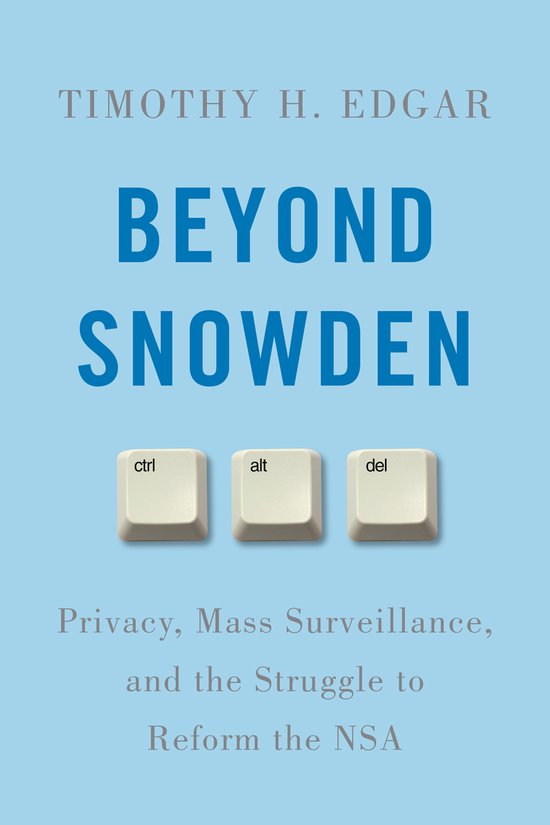
Beyond Snowden
Timothy H. Edgar
- 29 augustus 2017
- 9780815730637
Samenvatting:
America's mass surveillance programs, once secret, can no longer be ignored. While Edward Snowden began the process in 2013 with his leaks of top secret documents, the Obama administration's own reforms have also helped bring the National Security Agency and its programs of signals intelligence collection out of the shadows. The real question is: What should we do about mass surveillance?
"
Unmasking incidental collection prism downstream collection
The language of America's mass surveillance programs, once obscure and hidden behind veils of secrecy, is now part of the daily reporting about Russian hacking of America's 2016 presidential election. Edward Snowden began to illuminate the machinery of surveillance in 2013 with his leaks of top-secret documents, but it was the Obama administration's own reforms that helped bring the National Security Agency and its programs of intelligence collection out of the shadows.
In Beyond Snowden, Timothy Edgar—whose career in government coincided with Snowden's tenure—grapples with many of the issues that consumed the former NSA contractor now in exile in Moscow. Edgar's book takes us on a journey through America's surveillance state to find the answer to this central question: What should we do about mass surveillance?
Edgar is a long-time civil liberties activist who worked inside the intelligence community for six years during the Bush and Obama administrations. He believes that the NSA's programs are a profound threat to the privacy of everyone in the world. At the same time, he argues that mass surveillance programs can be made consistent with democratic values—if we make the hard choices needed to bring transparency, accountability, privacy, and human rights protections into complex programs of intelligence collection. Although the NSAand other agencies already comply with rules intended to prevent them from spying on Americans, Edgar argues that these rules—most of which date from the 1970s—are inadequate for this century. Reforms adopted during the Obama administration after the Snowden revelations are a good first step, in his view, do not go nearly far enough.
Edgar notes that our communications today—and the national security threats we face—are both global and digital. Beyond Snowden explains both why and how we can protect our privacy, without sacrificing the vital intelligence capabilities we need to preserve our safety and that of our allies. If we do, we set a positive example for other nations that must confront challenges such as terrorism while preserving human rights. The United States already leads the world in mass surveillance. It can lead the world in mass surveillance reform.
"Safeguarding Our Privacy and Our Values in an Age of Mass Surveillance
America’s mass surveillance programs, once secret, can no longer be ignored. While Edward Snowden began the process in 2013 with his leaks of top secret documents, the Obama administration’s own reforms have also helped bring the National Security Agency and its programs of signals intelligence collection out of the shadows. The real question is: What should we do about mass surveillance?
Timothy Edgar, a long-time civil liberties activist who worked inside the intelligence community for six years during the Bush and Obama administrations, believes that the NSA’s programs are profound threat to the privacy of everyone in the world. At the same time, he argues that mass surveillance programs can be made consistent with democratic values, if we make the hard choices needed to bring transparency, accountability, privacy, and human rights protections into complex programs of intelligence collection. Although the NSA and other agencies already comply with rules intended to prevent them from spying on Americans, Edgar argues that the rulesmost of which date from the 1970sare inadequate for this century. Reforms adopted during the Obama administration are a good first step but, in his view, do not go nearly far enough.
Edgar argues that our communications todayand the national security threats we faceare both global and digital. In the twenty first century, the only way to protect our privacy as Americans is to do a better job of protecting everyone’s privacy. Beyond Surveillance: Privacy, Mass Surveillance, and the Struggle to Reform the NSA explains both why and how we can do this, without sacrificing the vital intelligence capabilities we need to keep ourselves and our allies safe. If we do, we set a positive example for other nations that must confront challenges like terrorism while preserving human rights. The United States already leads the world in mass surveillance. It can lead the world in mass surveillance reform.