
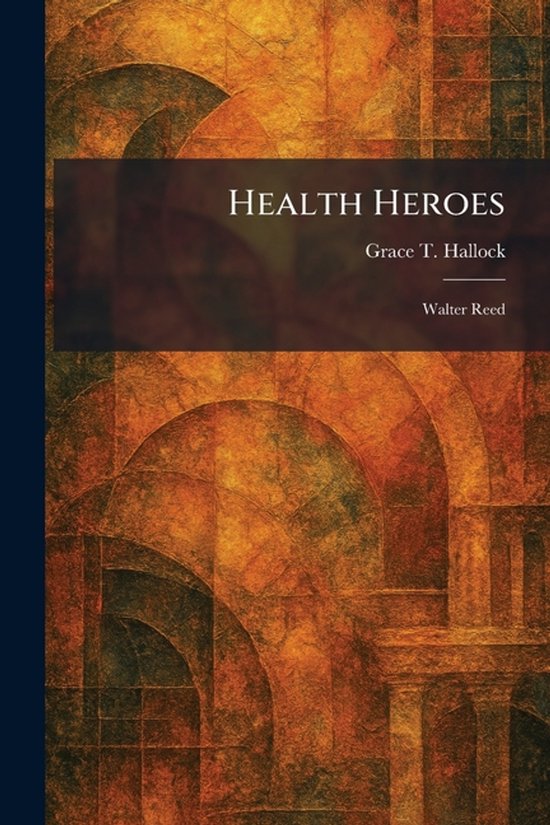
Health Heroes
Grace T Hallock
- 14 februari 2026
- 9781025701110
Samenvatting:
"Health Heroes, Walter Reed" is a compelling biographical study that highlights the life and monumental achievements of one of medicine's most vital figures. Written by Grace T. Hallock, this work explores the career of Major Walter Reed, the U.S. Army physician whose pioneering research led to the discovery that yellow fever was transmitted by mosquitoes rather than through direct contact. This breakthrough not only revolutionized the field of tropical medicine but also enabled the control of a disease that had caused widespread devastation for centuries.The narrative focuses on the scientific rigor and personal courage displayed by Reed and his team in Cuba during the early 20th century. By detailing the experiments and the spirit of inquiry that defined Reed's work, the book provides readers with a deep understanding of the history of science and the evolution of public health protocols. It serves as an educational tribute to the dedication required to solve complex medical mysteries.Ideal for those interested in the history of medicine and the stories of medical pioneers, "Health Heroes, Walter Reed" offers a clear and inspiring look at a man whose scientific contributions saved countless lives and altered the course of history. The work remains an important record of medical triumph and human perseverance.This work has been selected by scholars as being culturally important, and is part of the knowledge base of civilization as we know it. This work was reproduced from the original artifact, and remains as true to the original work as possible. Therefore, you may see the original copyright references, library stamps (as most of these works have been housed in our most important libraries around the world), and other notations in the work.This work is in the public domain in the United States of America, and possibly other nations. Within the United States, you may freely copy and distribute this work, as no entity (individual or corporate) has a copyright on the body of the work.As a reproduction of a historical artifact, this work may contain missing or blurred pages, poor pictures, errant marks, etc. Scholars believe, and we concur, that this work is important enough to be preserved, reproduced, and made generally available to the public. We appreciate your support of the preservation process, and thank you for being an important part of keeping this knowledge alive and relevant.