
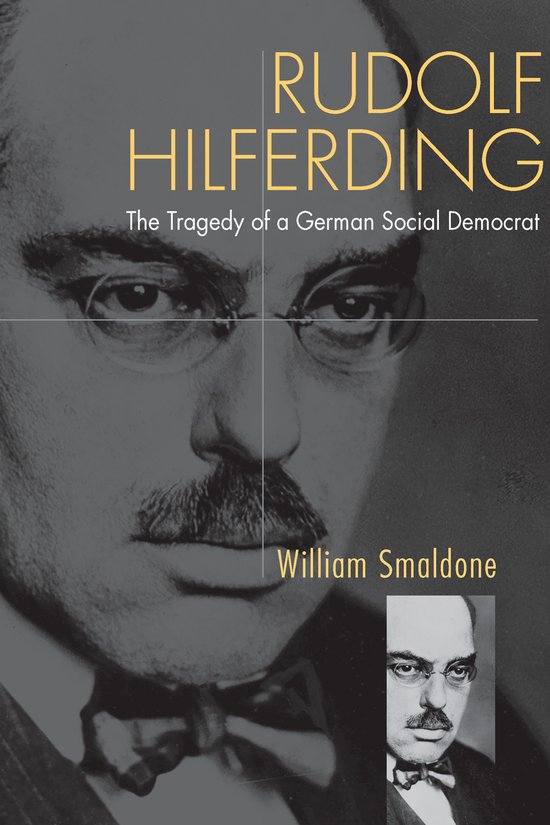
Rudolf Hilferding
William Smaldone
- 30 maart 2015
- 9780875807140
Samenvatting:
Until his death in a Gestapo prison cell, Rudolf Hilferding was one of Europe's most prominent socialist theorists and politicians. A leading economic thinker in the European socialist movement and an important politician in the German Social Democratic Party, he served as Weimar finance minister at the height of the inflation of 1923 and again...
Until his death in a Gestapo prison cell, Rudolf Hilferding was one of Europe's most prominent socialist theorists and politicians. A leading economic thinker in the European socialist movement and an important politician in the German Social Democratic Party, he served as Weimar finance minister at the height of the inflation of 1923 and again at the onset of the depression in 1928. At a time when Germany faced one economic and political crisis after another, he led social democracy's efforts to strengthen the republic and to achieve its socialist objectives.
This finely crafted intellectual biography illustrates how Hilferding's personal and intellectual journey reflected the failures of social democracy in its confrontation with nazism and communism. After Hitler came to power in 1933, Hilferding in exile continued the struggle against the Nazis. Caught in the maelstrom of the French defeat, in 1940 he was arrested by Vichy authorities and treacherously handed over to the Gestapo.
Throughout his eventful life Hilferding analyzed the central issues facing modern socialism, including the development of finance capitalism, the nature of imperialism, the path to socialism, and the organization of socialist parties. For Hilferding, democratic freedom was at the heart of the socialist project, and in rejecting the tyranny of both communism and fascism, he made important contributions to the debate on the nature of totalitarianism. His insights into Marxist theory adn practice are still vital for understanding the development of socialism in the twentieth century.