
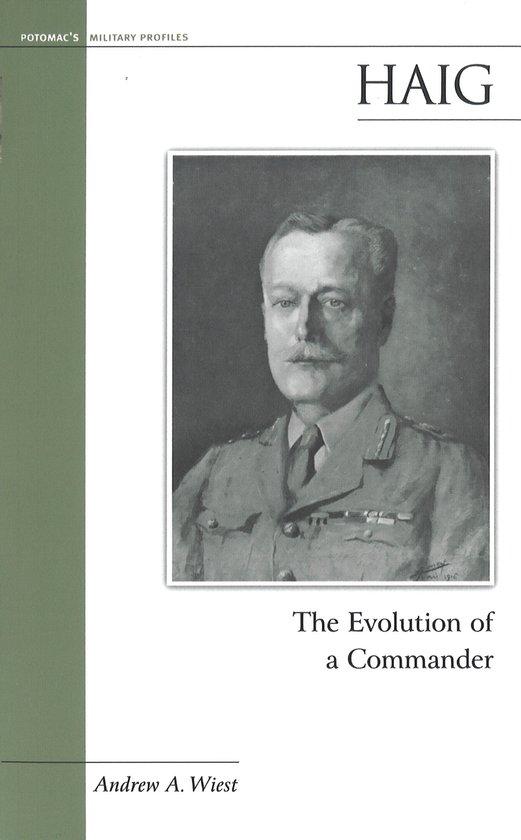
Haig
Andrew A. Wiest
- 22 juli 2005
- 9781574886849
Samenvatting:
While the Hundred Days Battles often go unnoticed or unappreciated in the history of World War I, obscured as they were by the failures of earlier campaigns, here modern war came of age. Douglas Haig's role in that transformation makes him the central figure of the war on the western front.
Douglas Haig's career is at the center of a debate concerning the nature of the Great War. Traditionalists contend that, like the majority of general from both sides, he was a hidebound relic of a bygone age who could not come to grips with modern war and sent his soldiers "over the top" in futile attacks, with a criminal disregard for the enormous cost in lives. Indeed, under Haig's leadership, the British Expeditionary Force fought its two signature battles of the war at the Somme and Passchendaele, earning him a reputation as a "butcher and bungler." A revisionist school now contends that wartime leaders, including Haig, inaugurated a phenomenal period of innovation, one that laid the foundations for modern warfare. This learning curve led from the killing fields of the Somme to the protoblitzkrieg tactics of the Hundred Days Battles. While the Hundred Days Battles often go unnoticed or unappreciated in the history of World War I, obscured as they were by the failures of earlier campaigns, here modern war came of age. Haig's role in that transformation makes him the central figure of the war on the western front.